Most people think a workout is all about effort.
It's not.
A workout consists of two equally important parts:
The work.
The recovery between bouts of work.
The quality of your results depends on both. In fact, one of the biggest mistakes people make is rushing from set to set because they think more effort equals more results. It doesn't.
When you cut your rest periods too short, you don't just make the workout harder—you make the next set worse.
Imagine you perform a heavy set of squats. The muscles, nervous system, and energy stores that power strength are temporarily depleted. They need time to recharge.
If you begin the next set before recovery is complete, you won't perform at your best. Instead of lifting at 100% of your potential, you may only be capable of producing 70-80%.
In other words, you voluntarily left 20-30% of that set on the table.
That's not toughness. That's poor programming.
Many experienced exercisers make this mistake because they judge recovery by how they feel.The problem is that feeling recovered and being recovered are not always the same thing. You may feel ready after ninety seconds. The truth often reveals itself halfway through the next set when the weight suddenly feels heavier, the bar moves slower, and performance drops.
The opposite mistake can happen too.
After several weeks or months of training, some people begin taking far more rest than they need, especially during lighter workouts. In these situations, excessive rest can make a workout drag on without providing additional benefit.
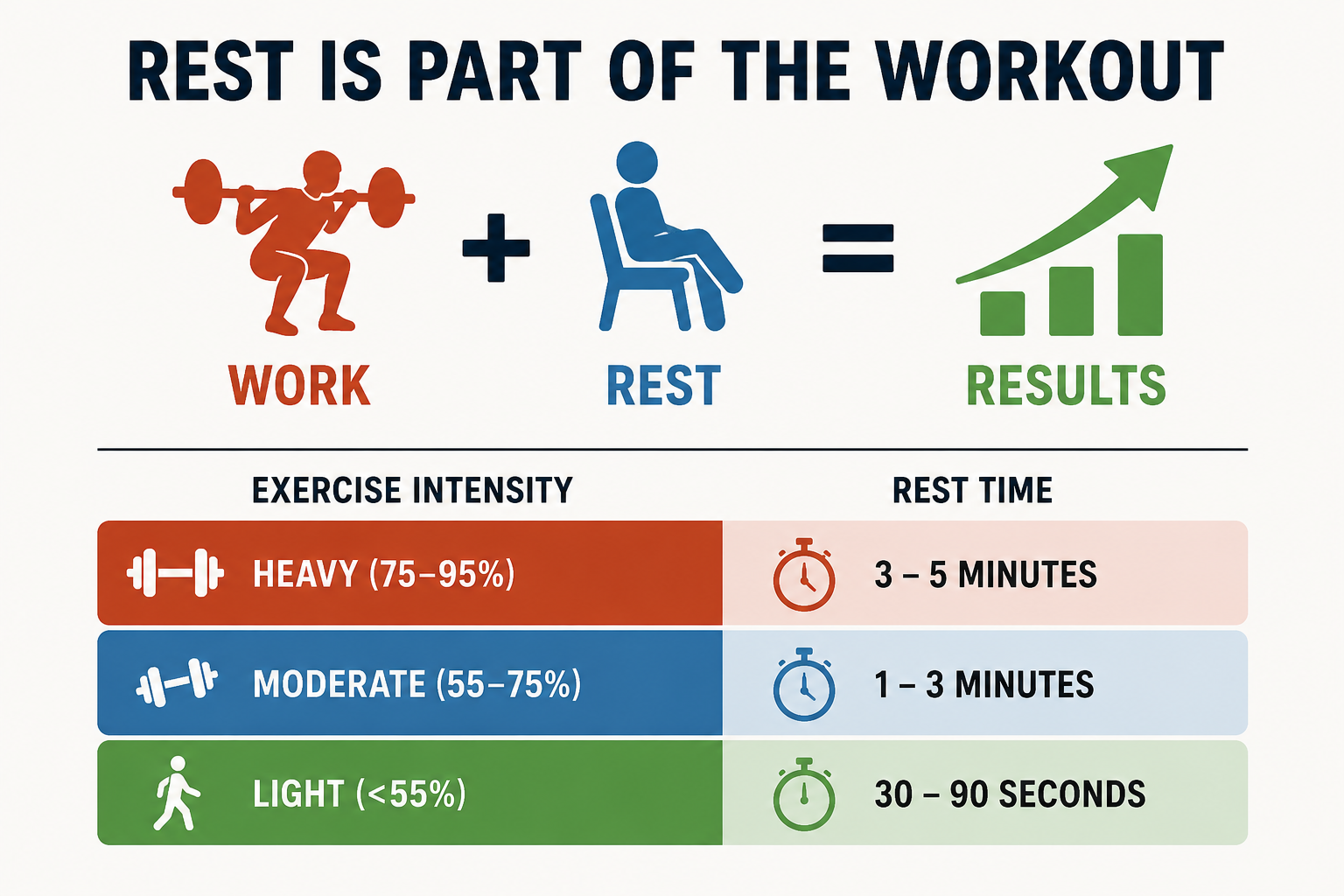
The key is matching your rest periods to the intensity of the work.
Remember
The goal is not to be tired.The goal is to improve. Sometimes that means working hard. Sometimes that means resting long enough to work hard again. Rest isn't the absence of training.
Rest is part of the training.