Viewing entries in
Book

Ch 10 - Spiritual Health (4th Aspect)

Comment

Ch 10 - Spiritual Health (4th Aspect)

Living a spiritually healthy life means living a life full of meaning and purpose. It means living in harmony with your own values and with the values of like-minded people you’ve surrounded yourself with. According to many, spiritual health brings the most joy of all other aspects of health. 

I’ve always envied folks who find deep meaning and comfort in the belief of something that cannot be quantified scientifically. For me, it used to be hard to believe in something which cannot be seen or heard with my physical senses. But experiences I’ve had raise some fairly important questions. Questions like: Are we able to measure every aspect of human experiences? Do we even know all of the human senses? 

I’m not sure we do. I pose a case in point. 
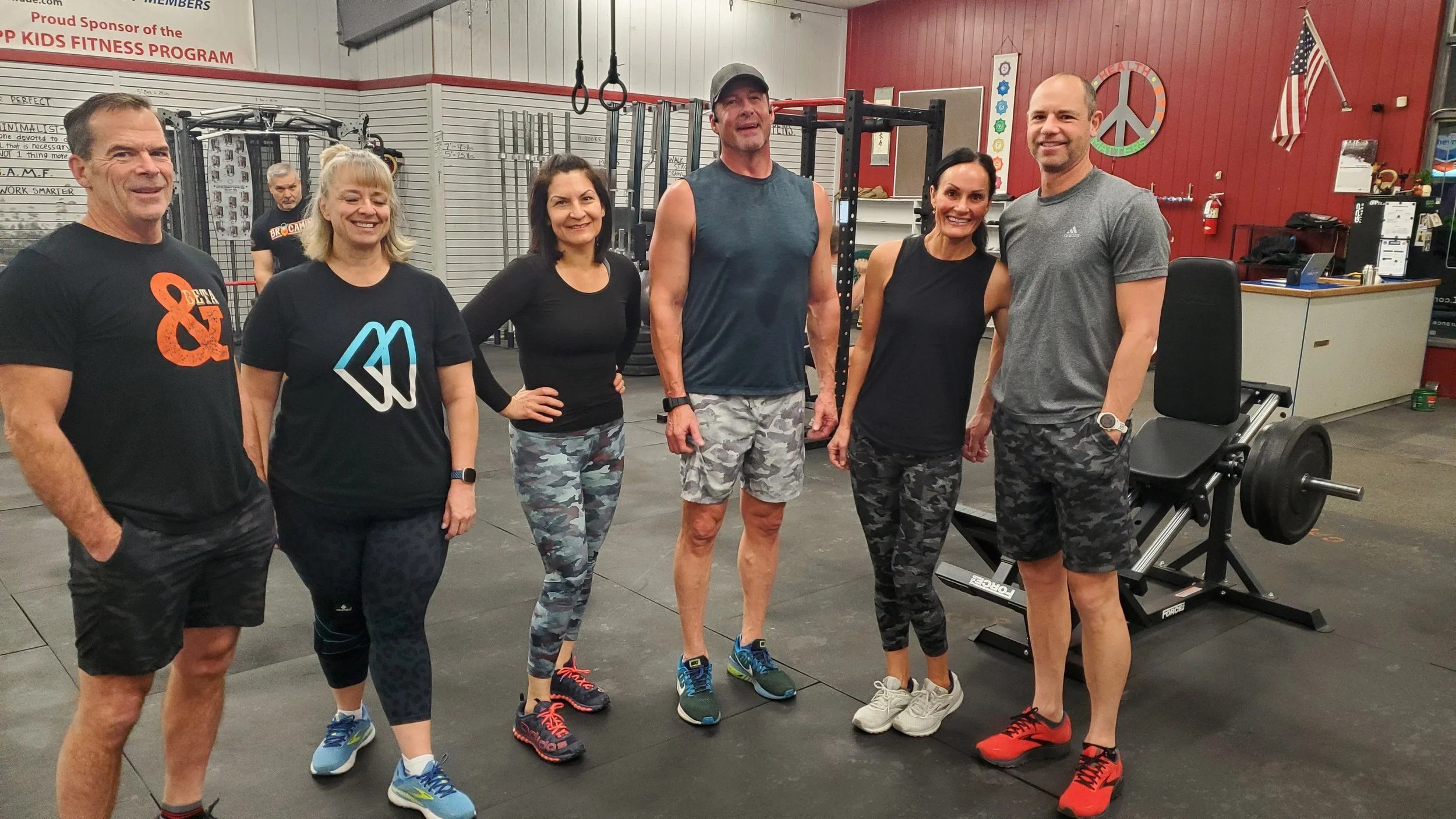
There is a phenomenon that happens too frequently at my gym to be dismissed as utter coincidence. I’ve been pointing it out so often, for so many years everyone who comes to the gym knows about it, laughs about it, and looks for it. They all agree it’s super weird, but none who have witnessed this phenomenon would deny it happens.

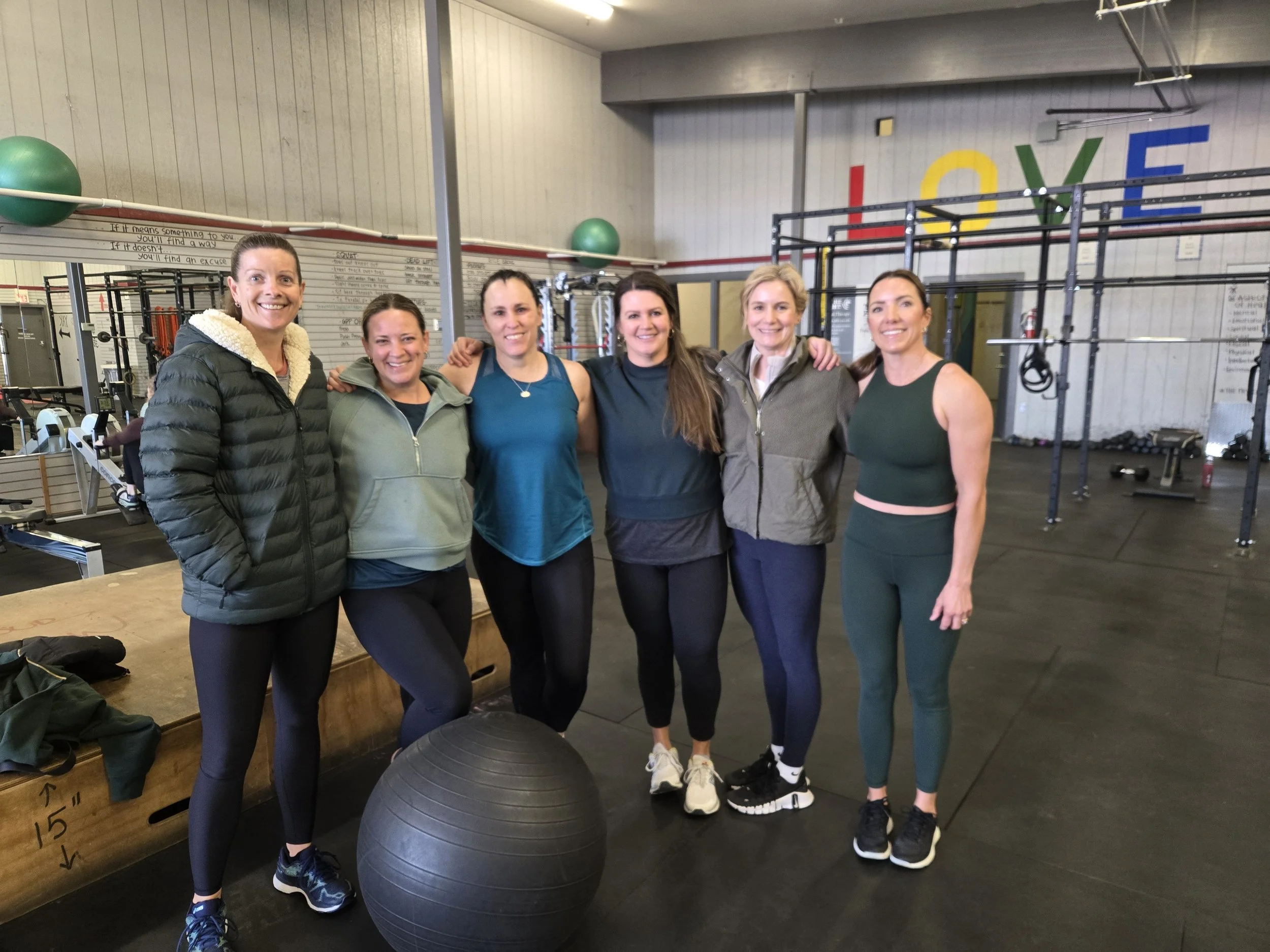
It seems people who are like-minded function in like-minded ways. I’d go so far to say it appears we are all connected somehow. There are a lot of ways this manifests itself I could tell you about, but the most interesting manifestation of this phenomenon is how people dress. On many days, folks who come to work out at our gym at the same time of day will be dressed the same. For example, Kristen and Hillary are workout buddies. They both come to the gym around 0900. Too often to be a coincidence, they’ll show up at exactly the same time, wearing exactly the same outfit. Like, they’ll arrive within 1 minute of each other wearing the exact same shirt, from the exact same store, in the exact same color. They’ll even be wearing the same color of pants. But that’s not the weirdest thing. They’ll meet at the door and laugh at each other for a minute, then they’ll walk into the gym to see 7 other people wearing the same color combinations. 

Coincidence right? I don’t think so. I mean, what are the odds of 9 out of the 12 people in a room wearing the same color combinations? Maybe it’d happen once, but this phenomenon happens almost every day. And it’s different with every class time. Like, one class will be wearing all black and gray. The next class will all have camo pants and purple tanks. The next class will all be wearing blue shirts. I’m not kidding you. It’s weird. 
So what’s my point?

My point is there is obviously a connection between people we aren’t fully aware of on a conscious level. We can’t name it. We can’t measure it. And even though scientifically this phenomenon doesn’t officially exist - it’s there. 

This pans out doesn’t it? Billions of people worldwide attribute feelings of connection, deep meaning and comfort to phenomena that doesn’t yet scientifically exist, right? Can they all be wrong? 


Steps for Improving Spiritual Health

Spiritual health isn’t about religion—it’s about meaning. It’s about feeling connected to something bigger than your daily to-do list.

Here’s how you build it:

Slow Down and Reflect
Take a few minutes each day to think. What do you actually believe? What matters to you? What kind of person are you trying to become? Most people never ask—so they drift.

Create Quiet on Purpose
Meditation, breathing, prayer, sitting in silence… doesn’t matter what you call it. Just give your mind a break from noise long enough to hear yourself think.

Get Outside (Regularly)
Nature has a way of putting things back into perspective. Go for a walk. Sit in the sun. Look at something bigger than your problems.

Practice Gratitude (Even When You Don’t Feel Like It)
Write down a few things you’re grateful for every day. This isn’t fluff—it trains your brain to see what’s working, not just what’s missing.

Do Things That Actually Matter to You
Not what looks good. Not what gets likes. What feels meaningful. If your daily actions don’t line up with your values, something’s off.

Find Your People
Surround yourself with people who are trying to grow, not just survive. Conversations matter. Energy matters. Choose wisely.

Be a Decent Human (Consistently)
Kindness. Empathy. Patience. Not just when it’s easy—but when it’s inconvenient. That’s where the real work is.


Here's my take: not everything's meant to be dissected under a microscope. There's a vast, uncharted territory—let's call it the non-physical realm. It's where spirituality touches each of us individually. Some folks find it within church walls, while others seek it in the quiet whispers of meditation or the embrace of nature.

When we nurture spiritual health, we are charting the universe within. It's where we find and nurture our core values. That’s where we can find clarity and peace of mind. And guess what? It’s not just good for US; it ripples outward. On some level our choices, our actions and our intentions are all interconnected. I believe this. Suffice it to say, I believe what’s good for you, is ultimately good for me. That means we all benefit. I’m down with that. I hope you are too. 


Comment

Ch 11 - Financial Health (5th Apect)

Comment

Ch 11 - Financial Health (5th Apect)

Poor financial health can deteriorate our ability to take care of ourselves, become educated, find work, maintain relationships and plan for our future. 

By winter of 2020, like many around the world, our business was failing. The pandemic was particularly rough on our tiny gym. Right off the bat, we were forced to close our doors for 4 full months. For the next six months we were limited to only 6 people per hour. Our 10 year old gym was decimated. We lost 50 members in the first week. Most of them were older and when the CDC warned that older members of society were most at risk of dying from COVID-19, most of our clients over 50 were gone. Losing fifty members wouldn’t do much to the mega-gyms in our area, but our membership numbers always hovered around 150-200 members. 50 members quitting was a very big deal and was an extremely big hit to the gym financially. We were used to 20-30 members coming at a time. Scheduling a workout became a nightmare for our clients. Most of our members found this inconvenient. Many showed support and were generous beyond measure. Many more quit.

Struggling financially caused us to work extremely hard. Those hours weren’t productive. This caused me to stress out, think badly of myself and work even harder. This went round and round until, eventually the wheels came off.

Linds and I held the gym together by a thread until the summer of 2021. But then something broke inside of me. I just snapped. 

At the time, I had been going through a bit of a revival of my soul. I had been studying spirituality and advocacy for a couple of years. Sparked by the equality movement in the summer of 2020 I became convinced I needed to speak up and start voicing my support of injustice as I saw it. Problem was I didn’t know how to get involved. Plus I never really had the guts to jump into the fight before.

All at once, I found the guts. Suddenly, in the summer of 2021 I decided to become a voice in the race for equality. 

Let’s just say I wasn’t the most eloquent advocate. My choice to speak out added to the financial unraveling of our gym. 

My very public actions alienated people. Alienating people caused relationships to end.  These were relationships I cherished. Some of these I’d fostered and cared for over 20 years. Despite my apologies and attempts at reparations many of my cherished relationships were abruptly and unceremoniously ended. This had an even more damaging effect on my psyche and the gym. I lost 44 friends that day. Our gym lost 44 members and a lot of good will in the community. 

I’m not sure why I allowed myself to be such an ass. All I can say is, poor financial health has far-reaching consequences. Financial instability can be a severe source of stress and is likely to show up negatively in many facets of our lives. 


How to Improve Your Financial Health

Let’s keep this simple—because complicated is usually what got people into trouble in the first place.

Know Where Your Money Is Going
If you don’t have a handle on your cash flow, nothing else matters. Sit down and map it out—income, expenses, everything. Most people aren’t broke… they’re just unaware.

Kill the Bad Debt First
High-interest debt is financial quicksand. Credit cards, especially. Attack it aggressively. Every dollar you free up here is a dollar that can actually start working for you.

Build a Real Safety Net
Life happens—cars break, bodies break, jobs change. Have 3–6 months of expenses set aside so one bad month doesn’t turn into a bad year.

Make Saving Automatic
Don’t rely on willpower. Set it up so money moves into savings, retirement, and investments without you thinking about it. Boring wins here.

Invest Like You Plan to Live a Long Time
Because you probably will. Learn the basics or get help—but don’t sit on cash forever. Time is your biggest advantage, even starting later than you’d like.

Stop Trying to Look Rich
This one stings a little. Most people stay broke trying to impress other broke people. Live within your means. Quiet wealth beats loud spending every time.

Check In Regularly
Your finances aren’t “set it and forget it.” Review them. Adjust. Stay engaged. What worked 5 years ago might not work now.

Leading a healthy, happy and secure life inarguably has financial elements so we must pay close attention to it. I’m paying closer attention to my financial health these days. It has helped. The gym is bouncing back and our future looks much brighter than it has in a few years. I have become a better advocate too. For me, I have learned positivity is a much more effective way to affect the changes I'd like to see in the world and in my community.


Comment

Ch 12 - Intellectual Health (6th Aspect)

Comment

Ch 12 - Intellectual Health (6th Aspect)

Intellect is the ability to learn, reason, create, know and understand. 

You can’t know it all, but every little thing helps, right? I believe our intellect holds the key to the limits of our own development and life satisfaction. Becoming educated either formally or informally and following other intellectual goals and pursuits contribute to our lives substantially. This is especially true of health and fitness.

In the late 90s, I worked at a very popular and large gym in Northern Utah. Every day around noon the gym would slow down and one particular guy would come in for his workout. 

You could tell he was a bit out of his element. Often he’d wear dirt encrusted boots over his soiled and greasy jeans. I hate when people wear jeans to the gym. It’s not a fashion thing (who’d take fashion advice from me?). Rivets on jeans rip vinyl seats. So do belt buckles, so do dangling multi-tools - he was wearing all of them. The first time we pointed out his belt buckle ripped the bench he was lying on he seemed genuinely sorry, but it didn’t stop him from doing his next set.

His workouts were - strange. He had a thing with his neck. It’s all he worked on. He’d come into the gym several times per week and walk down the rows of exercise machines trying to do things the machines weren’t designed to do using his head and neck. For example, you are supposed to sit on the leg extension machine and put your legs behind the pad then lift the pad by extending your legs out in front of you. He’d kneel down beside the machine, put the side of his head on the pad where your feet are supposed to go, and push it around with his head using the muscles of his neck. He’d sit there on all fours, head on the footpad doing head/neck exercises for sets of 50-60 reps. Then he’d walk over to the cable machine and try to hold the handle of the cable under his chin while he did chin-tucks. Dozens of them. The weirdest one I saw was where he padded a barbell in a squat rack, stood underneath it placing the top of his head in the middle of the barbell, then stood up with it trying to balance it on top of his head. He’d do a set where he stood there balancing the barbell, shaking incredibly, for 20-30 seconds then put it down. Then he’d pack on more weight and do it again. The dude could pick up an enormous amount of weight on his head.

After weeks of watching him do this, I decided I’d hit him up about it. While his workout didn’t make much sense to me, maybe I was missing something. 

I had a really nice conversation with him. Such a nice guy. He said he really admired people with thick necks and profound jawlines. He said he was rather embarrassed by his comparatively skinny neck and weak jawline. He explained a friend told him working out would help with this. So he joined the gym. 

I asked him “why only do neck stuff?” He said he was really happy with the rest of his body. He didn’t think he needed to work on anything else. I asked him if he was open to some other points of view on this. I even offered some training. He said, “No, thank you. I think I’ve got this.” With that, he gave me a wry smile and he was off to the next neck thing. 

There was so much I could have done to help this guy. Turns out, I wasn’t the one missing something. It was totally him. Thick necks and profound jawlines from lifting weights come as the result of heavy compound lifts. Lifts like squats, deadlifts, presses and pull ups. Working the neck directly isn’t very effective for building neck muscles. This is because it’s hard to apply direct resistance to the head, which is why he was on all fours at the leg extension machine. People who work their necks usually do so as a type of therapeutic or preventive program. My dude needed a little more knowledge and I was sad he wasn’t open to it. 


How to Improve Intellectual Health

If you’re over 40 and not actively sharpening your mind… you’re drifting. And drift is the enemy.

Here’s how to stay dangerous:

Stay Curious
Start asking better questions. Why does this work? What don’t I understand? Curiosity keeps your brain young—and most people lose it because they stop using it.

Never Stop Learning
You don’t need a classroom. Read. Watch. Study. Take a course if you want—but don’t confuse “done with school” with “done growing.”

Read Outside Your Bubble
If everything you read just reinforces what you already believe… you’re not learning—you’re hiding. Mix it up. Different viewpoints force your brain to work.

Think, Don’t Just Consume
Stop blindly accepting information. Question it. Break it apart. Decide what actually makes sense. That’s where real intelligence is built.

Create Something
Write. Build. Draw. Teach. Creating forces you to organize your thoughts—and exposes what you don’t actually understand yet.

Have Real Conversations
Talk to people who think differently than you. Not to win—but to understand. That’s how your perspective expands.

Clean Up Your Inputs
Your brain is only as good as what you feed it. Less junk content. More substance. Be intentional with what you watch, read, and listen to.

All of our thoughts and decisions are influenced by our experiences, academic knowledge, creativity, general knowledge and common sense.

Intellect truly holds the key to the limits of our own development. In this case, had my new neck-flexing friend understood more about the limits of his weird programming, he’d have gotten a lot more out of his workouts. He likely would have actually accomplished his goals. Predictably he didn’t. He went away after a few short weeks after our discussion, his neck none the thicker. 

You can’t know everything, but every little thing helps, right? Maybe the best thing to know, is the fastest way to improve the intellect is simply to know there is always more to know. It appears to me, with intellectual development, it’s not always about how much you know, instead it’s more about how much you don’t. French philosopher Albert Camus probably said it best. He said, “An intellectual is one whose mind watches itself.” 


Comment

Ch 13 - Environmental Health (7th Aspect)

Comment

Ch 13 - Environmental Health (7th Aspect)

Embarrassingly, this extremely important aspect of health was the last one to make the list. Considering the state of our planet this seems about right, doesn’t it? 

A few years ago I attended a fitness retreat in Essex, Massachusetts. Essex is a charming little New England town about a half-hour north of Boston. It’s known for seafood, tourism and antiques. My wife and I had an unforgettable time there. Every morning we’d have our coffee on the steps of the quaint shingle-style inn, then take walks through the mossy forests down to the bay at low tide and wade through tidal pools. If you’ve never been there you really must go. It was beautiful and, for a country boy from the high desert mountains, it was momentous to see the lush greenery and diversity of life in the Essex bay.

The retreat was held in an adorable bed and breakfast where the owners and management of several gyms throughout the Boston area met to discuss the state of their gyms, their staff and the fitness world in general. It was a truly remarkable three days. 

It was remarkable because the main owner of the gyms was a former hippie who moved from Salt Lake City to Boston in the late 60s to get more involved in the civil rights movement. Since the 60s, like most baby boomers, he left his nonconformist roots in the dust to become a ragingly successful capitalist. However, he hung on to certain aspects of his former free-spirited beginnings, like loud shirts and rollerblades. He was also a very active environmentalist.

What struck me most about the retreat was how environmentally conscious and aware the New Englanders were. We carpooled everywhere, doubled up in rooms, recycled everything, and left no trace when we were out in the forest. At one point in the retreat, we discussed the environment in ways I had never fully considered. Since it was a fitness retreat the speaker's related environmentalism directly to health in all ways. 

That weekend sparked the thought in me that “environment” must be on the list of “8 Aspects of Health.” What I learned since that weekend was that our environment has three major components. 

  1. The human component - is composed of individuals, families & communities. 

  2. Nature component - which is air, water, land, and all living things.

  3. Human-made components - which is a combination of many things both natural and human-created, like buildings, parks, bridges, roads, etc.


We are products of our environment. If any aspect of our environment is polluted, this will be reflected in our personal health as well as the health of our community. For example, if our human environment is polluted by toxic negativity then our personal health will suffer. If nature becomes polluted, either by us or other natural elements, our personal health will suffer. If human-made components like power lines, dams and roads overpower the natural elements of the earth it creates imbalances in the environment and our personal health will suffer. 


How to Improve Environmental Health (Without Becoming a Full-Time Activist)

The goal isn’t perfection—it’s awareness and better choices.

Conscious Consumption
Start paying attention to what you bring into your life—food, products, even information. If it’s low quality, toxic, or disposable… it’s probably costing you somewhere.

Reduce, Reuse, Recycle (In That Order)
Recycling is fine. But the real win? Buying less junk in the first place. Use what you already have. Most people don’t need more—they need less.

Simplify Your Daily Habits
Use less water. Waste less energy. Cut down on single-use plastics. You don’t need to overhaul your life—just stop being careless with it.

Get Outside—Regularly
Walk. Hike. Sit in the sun. Touch grass (literally). Your body and brain still expect nature… even if your lifestyle forgot.

Be Part of Something Bigger
Join a cleanup. Support local efforts. Care about your community. Environmental health isn’t global theory—it’s local behavior.

Think Before You Choose
How you get around. What you buy. Where you spend money. These decisions add up fast. Start acting like they matter—because they do.

Clean Up Your Space (and Your Circle)
Clutter drains you. So do negative people. Build an environment that supports your health instead of quietly working against it.

Often we underestimate the importance of the environments we live in. Sometimes the smallest change to our environment can have a major impact on our positivity and outlook. I once had a client tell me she became successful with weight loss by making her bed each morning. She claimed the simple act of organizing her environment by making her bed set her on track to making more healthy changes throughout her day. 

Even the smallest changes to any of the three components can have an exponentially positive effect on our own health and the health of society. I challenge you to commit today to discover different ways of organizing and cleaning up the environments you live in. Becoming more environmentally conscious and making even the smallest healthy changes to our environment will pay dividends to our future and to, perhaps, just as importantly, to future generations.


Comment

Ch 14 - Physical Health (8th Aspect)

Comment

Ch 14 - Physical Health (8th Aspect)

Physical health is the conduit.

Physical Health covers a lot of different areas. It covers your nutrition, fitness, measurements, body composition, etc. Really, anything having to do with the body itself should be considered part of your physical health. 

Physical health is special because all points of health intersect here. There is something inside of each of us that innately understands this. We all know tying a physical act with a mental or spiritual pursuit helps us grasp or command the mental or spiritual intention more fully. For example, why do we look up or to the side when we think deeply about something? Is the physical act of looking up really necessary to the thought process? It’s not, but linking a physical act (looking up) to a mental task can help with the mental task. Humans do this a lot. It is very natural. 

The first time I encountered this was 25 yrs ago. I was a personal trainer at an affluent gym in Salt Lake City. I had been hired by a very successful litigating attorney. He told me in our initial consultation he needed to lose weight for an upcoming trial. I understood the whole weight loss thing for the obvious health reasons, but why for an upcoming trial? 

“Juries don’t like fat lawyers. They think fat lawyers are lazy and dishonest. If I lose the weight they’ll like me and trust me more explicitly.” 

This blew me away. It was the first time I ever connected the thought that a physical appearance might somehow convey a mental capacity like honesty or an intellectual capability. It was also apparent to me he was hoping to use his physical appearance as an indirect means to strengthen his financial future. If he won the case he’d, no doubt, strengthen his position in the firm. Winning would improve his standing with his professional colleagues and ensure he’d get the biggest cases. Improving physical health as a means to improve his financial health was new to me. Remember, I was a total health nerd. Back then I couldn’t think of another damn reason to work out other than to improve fitness and health. But it turns out this isn’t so rare. It happens a lot, with more things than most people realize. 

Here’s another example. Once a lady told me she was joining the gym so her husband would look at her “THAT way” again. In other words, she wanted a romantic connection with her husband. She wanted him to want her the way he did back when they were first dating. She imagined if she looked the same way as she did after high school her husband might be more interested in her. This was going to be difficult because as a mother of 4 who was in her early 40s things will have permanently changed for her physically. This is neither bad nor good. It just is. Not to mention, I knew it wouldn’t really matter. I know her husband personally. He worships her body. There is no way her thought of getting into better shape originated with him. And even if it would have come from him, her problems were way bigger than attraction issues. In any case, hers was clearly NOT a physical pursuit, she was looking for an emotional connection with her husband. This is an emotional and social pursuit. So why then was she gravitating toward a physical aspect of health to gain non-physical benefits? 

I believe the physical aspect of health is the conduit to improving all aspects of health. I believe we all know this inherently. It’s why we naturally gravitate toward the physical. Humans intrinsically understand the more senses involved in a learning process, the faster and more completely we will master that process. 

The principles of learning are universal. Therefore, the skills and abilities we learn to improve our physical health will be the same as the skills and abilities needed to improve all other aspects of our health. It’s why we gravitate toward the physical.

For example, to improve your physical health you need to complete daily, consistent reps of an exercise over and over. Not too few. Not too many. Wouldn’t this principle apply to our emotional health? Wouldn’t the experience of completing daily, consistent reps of exercises like making eye contact while speaking, help to improve my emotional health in the same way? 

Here’s another. In order to improve my physical health, I have to learn to progressively overload my physical body in a way that initiates physical improvement. Not too little, but not too much. Wouldn’t learning to progressively overload my capacity for putting myself into unfamiliar social situations help me to become a more familiar and dependable member of my community? I am an extreme introvert. I hate social situations. My instinct is to avoid people and parties at all costs. Social situations cause me extreme stress. My initial instinct is to avoid them, but avoiding social situations makes me lonely. This causes me even more stress. This is a never-ending loop. I learned to cope with my crippling social anxiety by learning to become accustomed to the stress. I started small, by only socializing with individuals. From there, I progressively overloaded my capacity for interacting with people by expanding my social circle to couples and small groups. Over the years, I’ve become better at social interaction. I’ve become better at putting myself in social situations and also better at handling the social interactions I’ve put myself into. This took progressive overloading.

Learning to use our physical body to improve other aspects of our health is the fastest and most complete way to learn the skill we are seeking. It’s why many of us default to exercise when trying to get back on track after life throws us a few curveballs. 

Remember physical health is special because all points of health intersect here. The act of tying a physical act with another less tangible aspect of health (mental, emotional, social, spiritual) helps us learn. Using a physical act to learn a less tangible aspect of health helps us learn that aspect faster and more completely than if we didn’t use it in the first place. 

Exercise and using our physical bodies is magic. Increasing our strength, endurance, and ability to move increases our physical health in all of the most important ways. This is invaluable for all aspects of our health. 


Comment

Ch 15 - Minimalism

Comment

Ch 15 - Minimalism

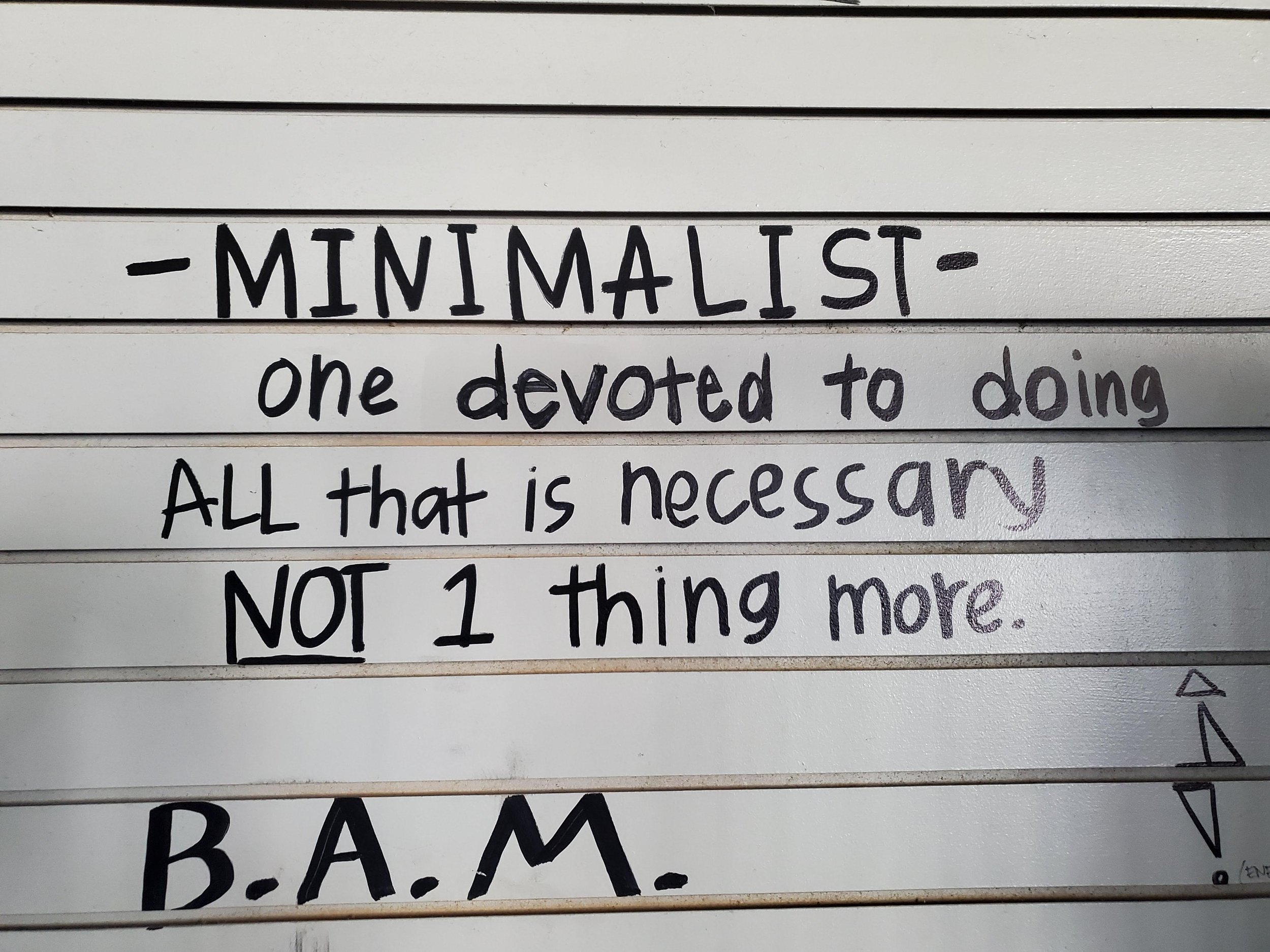
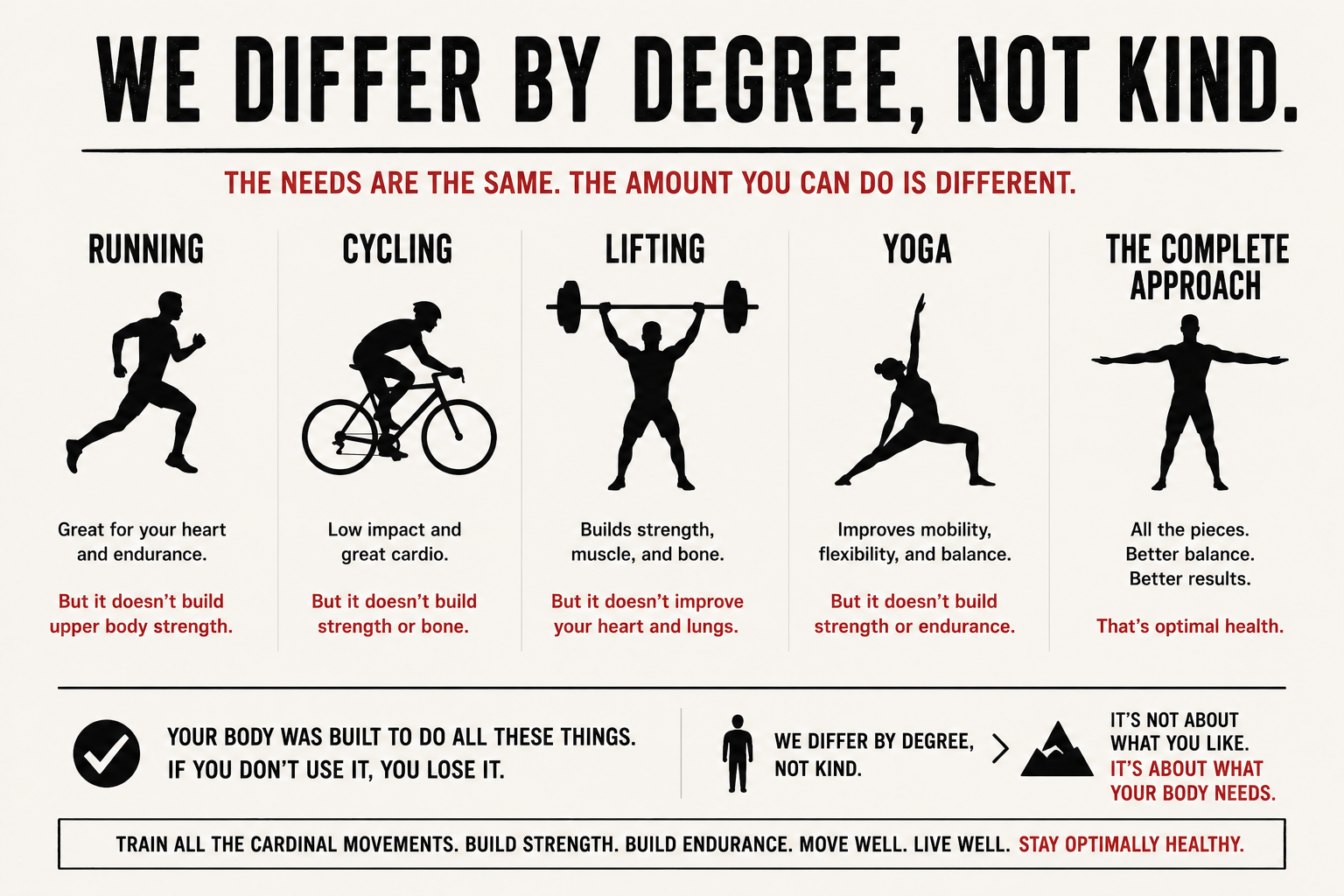
We are minimalists. 

Minimalists care primarily about efficiency and effectiveness. 

We refuse to do one more rep of one single exercise than is absolutely necessary to accomplish our goal of optimal health.That said, we realize nothing worth having comes easily. Therefore we are committed to doing whatever is required to get to optimal health.

Our approach is unique in the health and exercise world. Most programs are concerned with seeing how much people are capable of doing. We find this silly, misguided, and believe it wastes time, intent and effort. Truth is, NOBODY CARES about the highest achievements one can accomplish inside of a gym. 

I can prove this. What is the highest bench press ever recorded? Most people don’t know. Do you? Who performed that bench press? Who did he take that record from? What was the highest bench press before? 

Funny so many of us seem to place such high importance and emphasis on a thing like “hyperfitness” that has no demonstrable importance or meaning in our lives. If NOBODY knows the highest bench press in the world, then it’s not important to most people. Why then are so many people spending so much time, intention and effort (like I foolishly used to do) to accomplish something so unimpressive/unimportant? It’s baffling. 

Does this mean we shouldn’t bench press, squat or deadlift? No. All of these exercises are essential to our optimal health, especially when done right. We need them. We should do them if we can. But we should do them in a minimalistic manner. In ways that enhance our lives, NOT in ways that diminish our lives.

Remember, we know great functional capacity is useful only OUTSIDE of the gym. That’s where most of us find our true passions and purposes. The gym’s job is to give us the energy, strength and vigor needed to succeed in pursuits we have deemed important, such as being an attentive spouse, an engaged parent, a more creative and productive businessperson, a better employee, or a more inspiring boss. The gym’s job is to give us more energy to be happier and more cheerful, more active in our grandchildren’s lives, and to worship in the ways we feel are important. All of it and more in an unlimited fashion. This should be determined only by ourselves and not dictated to us by self-imposed limits on health or capacity. 

Get in the gym, get your health and vigor then get out. Don’t waste time doing more than is necessary. 

Maybe you are thinking “Minimalism is just an excuse to do less.” LOL. Anyone who would think this has never done one of our workouts. However, if you think this, I invite you to take the “ONE PRIDE BUCK” challenge. Here’s how that goes. You bring your bad-ass self to Centerville, UT and dazzle us all with your hardcore excellence. After you’ve signed all the appropriate waivers and such, Linds and I will lead you through one of our average workouts. We’ll even film it! After you kick ass and have shown us all how pathetic we are, I’ll stand corrected and pay you ONE single PRIDE BUCK. I will hand this to you with my forever respect and adoration. 🙂    

We don’t cut corners. Remember we are here to usurp all we can from our lives without being held back by self-imposed limits on our capacity. 

Yes, we will do all it takes in the gym, but NOT ONE THING MORE. Instead of doing more reps in the gym, I say we do more “reps” in life. Do them where they count. Do reps where it can benefit yourself, your family, your loved ones, your community, your country, and your God. There is no doubt the energy you put into these more important things will come back to you in more meaningful, important, and joyful ways. 


“I went to the woods because I wished to live deliberately, to front only the essential facts of life, and see if I could not learn what it had to teach, and not, when I came to die, discover that I had not lived. I did not wish to live what was not life, living is so dear; nor did I wish to practise resignation, unless it was quite necessary. I wanted to live deep and suck out all the marrow of life, to live so sturdily and Spartan-like as to put to rout all that was not life, to cut a broad swath and shave close, to drive life into a corner, and reduce it to its lowest terms...” 

- Henry David Thoreau

Comment

Ch 16 - The RWND Motto

Comment

Ch 16 - The RWND Motto

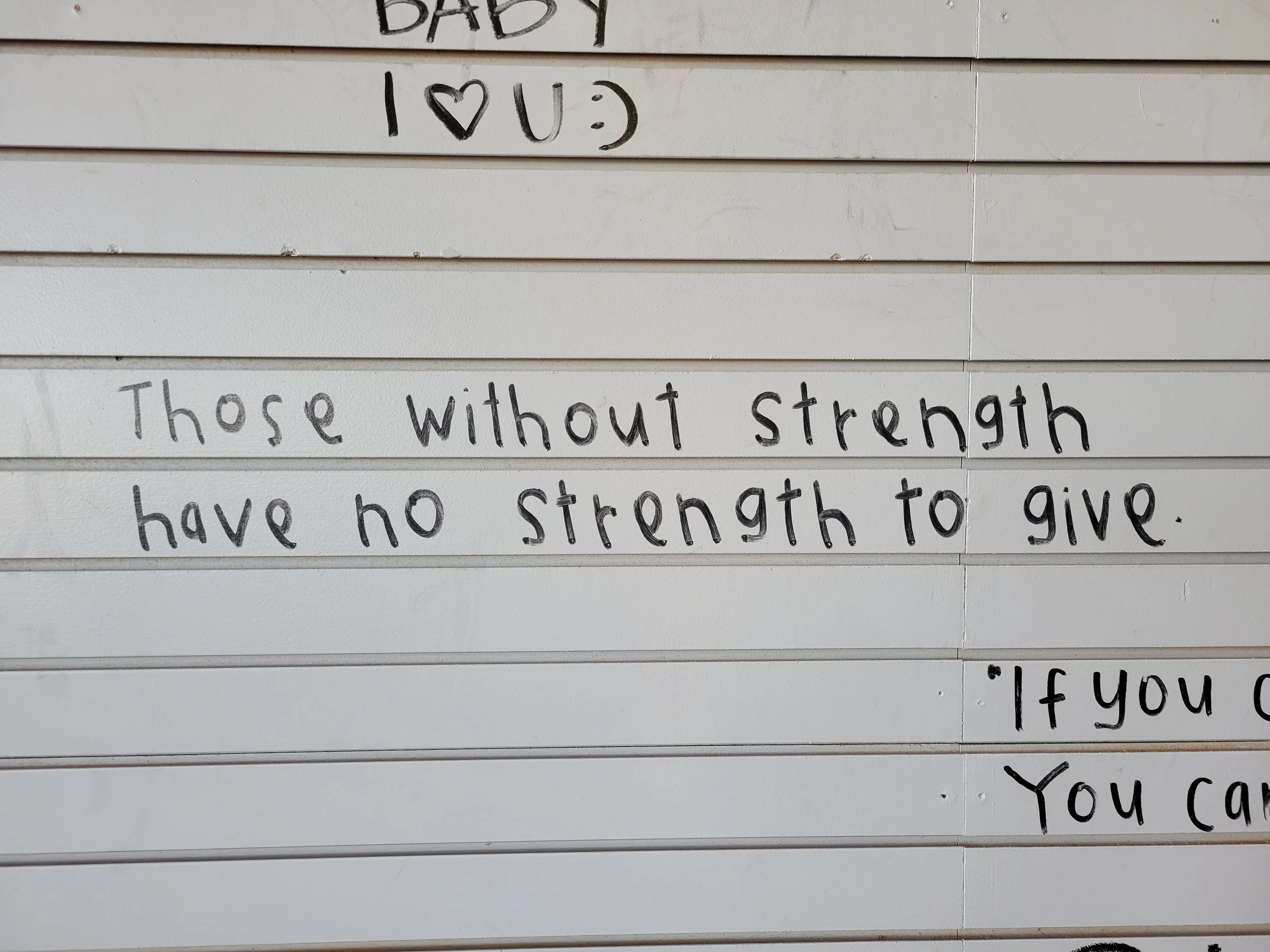
“Without Strength, You’ve None to Give”

Let’s never forget the things that matter most to us now. Most of us start out with modest goals. We want better health. We want more energy. We’d like to show up better for our people. We’d like to look a smidge better, which is subjective and can change. 

Then the fitness world has ways of drawing us in. Just being a part of it exposes us to more meaningless pursuits. 

The fitness world would have us believe dumb shit like, “Six-pack abs are paramount,” or “you can never be too thin,” or “she who exercises hardest, exercises best.”The longer we are exposed to the fitness world the more negative the hold it seems to get on us. 

The fitness world builds its substantial profits in two main ways: (1) They prey on our insecurities by constantly telling us we aren’t good enough. (2) They make us believe our only worth is in the subjectively defined (and constantly changing) “beautiful body” we are building in the gym. 

Insecurity and vanity are the two worst reasons to eat right and exercise.

Loving our bodies and loving life gives health a deeper meaning, which makes succeeding with health more attainable. Strengthening our bodies helps us to strengthen others. Giving the benefits of our health to others makes those benefits more impactful and longer lasting for all involved.


Comment

Ch 17 - Sleep More

Comment

Ch 17 - Sleep More

Want to know what Olympic athletes, Ironman winners, strongmen and the winner of Mr. Olympia have in common? They don’t work rotating night shifts. 

My friend Danny has worked overnight shifts for years. She’s a nurse. Like, for 20 years she’s been doing this. She’s also a mother, so she has to get kids to school in the morning. Right about the time she should be getting into bed to catch up on her sleep, she has to get kids ready and get them out the door. When the kids were young, she had to be back to school within a couple of hours to pick them back up. Then back to school a couple of hours later to pick the older kids up. Then it was soccer, dance and any other activity they were involved in. Not to mention she had to find time for her workout somewhere in there. Not long after she gets home from running kids around from activities, her husband is getting home from his job and it is dinner time for the family. She has a very traditional marriage and loves to cook for them. After dinner comes homework, then a little later it’s bedtime for the kids. About the time she puts them down, it’s time for her to start her shift on the phones. 

Danny does get sleep though. What she finds herself doing is catching sleep wherever she can throughout her day. But that’s not how sleep works. Gaining the healthy benefits from sleep requires 6-8 hours of downtime - in a row! She usually only gets about 3-4 hours sleep in a row. 

Danny is a tough chick, but over the years this sleep schedule has taken a toll on her health. Thank god she has taken the time to add exercise to her daily task list, otherwise her medical issues could be much worse. Messing with your body's natural circadian rhythms is one of the worst things you can do for your health. We’ll talk more about these health complications below, but first let’s cover circadian rhythms. 

Circadian Rhythms

We all have a built-in biological clock. It does more than you’d think. Among other things it controls:

  • wakefulness

  • sleep

  • metabolism

  • heart rate

  • blood pressure

  • body temp

  • etc.

Our biological clocks are set to a circadian rhythm that cycles every 24 hours. If we disrupt this cycle by just a smidge, like 1-3 hours, we'll feel it. Some of us feel it immediately. Others of us get a lag of several days, or even weeks. Throwing your body out of its normal rhythmic patterns is known to cause problems.

We know the part of your brain where circadian rhythms live. It's in your suprachiasmatic nucleus (SCN). That's in the hypothalamus. The hypothalamus seems to be fairly important to your health in that it regulates stuff like body temperature, fluids/electrolytes, hunger and hormone production. I'm not saying you couldn't get healthy without help from the hypothalamus; but if you were to fry the damn thing by screwing up your circadian rhythms hard and often, you might struggle a bit. 

The other thing we know is your SCN is connected to the retina of your eye. If it is dark, the SCN tells your body to secrete melatonin and make you peacefully sleepy. If it's light, the SCN inhibits melatonin production. Hint: if you are having trouble sleeping please ponder on the "darkness" thing you just learned. 

In the winter (assuming you live far from the equator), your SCN has developed a strange way of adapting to the longer periods of darkness. It produces melatonin in two stages. The first stage happens within a couple hours of sundown. Ever notice you get sleepy earlier in the winter? The second happens around 4 a.m. In the middle of these stages, there is a natural period of restful wakefulness. But there is a problem. In the developed world we don't go to bed earlier in the winter like our ancestors did. Instead of following our natural rhythms, most of us are just barely turning in right around our period of "restful wakefulness."By not turning in earlier when the first melatonin is released, it becomes more difficult to go to sleep.

Not getting enough sleep or enough of the right kinds of sleep throws us out of our natural circadian rhythm. This can be one of the reasons why (for some of us) our fitness goes to hell. It is also likely a contributing factor to weight gain, irritability (who doesn't get a little pissy about gaining weight?) and general lethargy. It can also be why so many of us get sick and depressed. 

Therefore, here is one of the most important keys to attaining good health and fitness: Don’t let your circadian rhythms get too far out of whack. If they do, get back on track ASAP. 


Problems with not getting enough high quality sleep

  1. Memory problems. Lack of high quality sleep affects short term and long term memory. During deep sleep (REM) is where your brain forms memory and learning patterns.

  2. Creativity and problem solving go out the window.

  3. Emotional problems. Aren’t we hot tempered and moody enough? Lack of sleep is a leading contributor to anxiety and depression.

  4. Weak immune system. Sleep is your frontline defense against infections that cause colds and flu. 

  5. Car accidents and accidents at work. Lack of sleep causes lack of focus.

  6. Increased risk of diabetes. Lack of sleep causes your body to produce stress hormones like cortisol. Cortisol production increases blood sugar levels in the body. This can lead to type 2 diabetes. 

  7. Weight gain. Once again, stress hormones. Cortisol increases hunger and decreases satiety.

  8. Decreases testosterone. Yep, stress hormones again. Cortisol is a catabolic hormone. This means it breaks down healthy tissue. It does this, in part, by suppressing testosterone and its effects. This lowers sex drive and vitality - in all people. 

  9. Increases risk of heart disease and stroke. Sleep deprivation increases inflammation. Inflammation is one of the leading causes of heart disease and stroke.

  10. Lack of recovery - from workouts, life, ect.

The takeaway? Get on a sleep schedule. Get more high quality sleep. Shoot for 6-8 hours. You need more if you are active, stressed or older. 


10 Tips for getting higher quality sleep after 40 (regulating circadian rhythm)

  1. Go to sleep at the same time each night.

  2. Get up at the same time each morning. 

  3. No caffeine after noon.

  4. Have only 1 glass of wine in the evening. It has a calming effect. 2 glasses undo this calming effect.

  5. Do not eat within 2 hours of bedtime.

  6. Limit fluid intake close to bedtime.

  7. Do not exercise within 2 hours of bedtime.

  8. Dim the lights 1 hour before bedtime (dim amber colored lights are preferable to blue or white lights).

  9. Develop a pre-sleep routine which decreases stress and activity (read books, listen to calming music).

  10. Don’t lie in bed awake. If after 20 min you haven’t fallen to sleep, get up and do something calming, like reading or listening to calming music. 


Humans can die faster of sleep deprivation than they can die of starvation. If you get less sleep than you need you’re just killing yourself slowly. He or she who wears 4 hours of sleep per night as some badge of honor, it’s time to re-think that. It’s time to take your health more seriously. Sleep deprivation (ie. slowly killing yourself) will wreak havoc with your body, mind and spirit. It’s unsustainable. If you pull it off short term, you’ll be lucky if you only experience temporary disruptions to your mood, memory or health. Long term sleep deprivation is dangerous and its side effects can be permanent.

Dieting and exercise don’t make any sense if you don’t get proper amounts of sleep. The fastest thing you can do to improve your health, like today, is to start getting enough high quality sleep! 

Comment