Introduction/Opening

1 Comment

Introduction/Opening


Fit AF(ter) 45!

Train Smarter. Age Slower. Build a Body That Keeps Up and looks good on!

By Neil Anderson


Some Legal Stuff


Before you work out, it is recommended that you learn about your body and its limitations. In other words, start slow, with low volume and low weight, and progress slowly. If you doubt your capacity, you should slow down, form up, and/or back off until you learn how these workouts will affect YOU specifically. This may take some time. 

If you have specific health concerns, be sure to clear your condition(s) with a physician before participating in our workouts, nutrition or other activities. Please feel free to write to us with concerns about how to apply workouts under your physician's care. We are also happy to field questions from your healthcare provider. admin@gppfitness.com


Acknowledgments


One of the worst things about having a conversation with me (phone, email, text, eyeball-eyeball) is the contents of those conversations often end up in front of others. 

If this has ever happened to you and you've taken offense, please forgive me. I get that my one-sided presentation of our conversation is not fair, not remotely. And if it seems like I've belittled your POV by being sarcastic or overly simplistic in my review of our conversation–it’s NOT my intention. 

Truth is, our conversation fascinated and intrigued me. To the point I sat down for what takes me hours to peck out some thoughts on it. Sometimes I'll stew on a subject for days/weeks/months and yes, even years, before writing down some thoughts from our chat. Though my comments may seem terse, they are usually only theatrically so. I've come to learn that pinning emotions to a point helps the medicine go down (now you'll be singing that all day. HA!).

Please understand I hold you in the highest regard. So do the folks who read about our conversation. We all know this one-sided POV reeks of chicanery. But, sometimes the points we discuss are helpful to others when painted in a new light, albeit sarcastic and simplistic. I've even heard the articles here have helped folks to change their lives. That's not because of me. It's all of us. Thank you for contributing.


The App

This book will teach you everything you need to know about getting healthy and fit over 40. Once you have all the understanding, it is my hope you will apply it by designing workouts, nutrition and motivation for yourself. Don’t worry, I haven’t left anything out. You’ll know everything I used to do the same. 

However, there will be a fair number of you who just want the programming delivered daily. Cool. I got you. To get that, go grab the App that goes with this book. It’s called RWNDFIT. Hit up our website at www.gppfitness.com The App also has other cool features like, meal planning, meal tracking, body measurement tracking, photo tracking, BP tracking, sleep tracking, messaging and all the rest. Seriously, it has everything. It even integrates with your smart watch.

Workouts are delivered to you daily along with complete instructions, video demos, and workout tracking. It’s good stuff. It integrates with your smartwatch, Fitbit, Garmin and your Myfitnesspal App. When you download it, be sure to fill out your consultation form and especially collect your baseline data by doing measurements and photos (it’s all in the App and is so cool). Also, become familiar with the nutrition stuff. You can track your nutrition through the App if that is your personality. If you’d rather, the App will produce your nutrition plan for you, complete with photos, videos, recipes, grocery lists and tracking! You can communicate with us and with each other through the App. After you sign up, make sure you drop us a note in messages to say hi! 


Table of Contents


Some Legal Stuff

Acknowledgments

The App

Warm Up

Section 1 - Core Philosophies

Ch 1 - Understanding The Battle

Ch 2 - Challenges to Training at Our Age

Ch 3 - “Living Well” (a position stand)

Ch 4 - What is the Goal?

Ch 5 - Optimal Health

Ch 6 - 8 The Aspects of Optimal Health

Ch 7 - 1st Aspect - Mental Health

Ch 8 - 2nd Aspect - Emotional Health

Ch 9 - 3rd Aspect - Social Health

4th Aspect - Spiritual Health

5th Aspect - Financial Health

7th Aspect - Environmental Health

8th Aspect - Physical Health

Minimalism

The RWND Motto

Sleep More

Meditation

Love Yourself

Capture a Baseline

How to Capture Baseline Data

Section 2 - Exercise

RWND Approach to Fitness

RWND Programming Method

What is the Perfect Warm-Up?

Push, Pull, Squat and Core

We Differ By Degree, Not Kind

Understanding Intensity

Use the RPE Scale

Resting Between Sets

How Should I Rest Between Sets?

Abuse It and Lose It

Volume is the Enemy

Faster Reps, 60% and RIR

De-Loading

What CAN You Do?

Alts & Subs

Common Alts and Subs

Should I Work Out When I’m Sick?

Movement Begets Better Movements

Is Your Workout Bullshit?

What Is the Best Time of Day to Work Out?

The Importance of BALANCE

The Groover Rep

DOMS, DOMS, DOMS, DOOOOMS!

Fitness Aids: Which Do You Need?

Section 3 - Nutrition

RWND Nutrition

Is Your Diet Bullshit?

1st Tenet of Nutrition: “Nutrition is a Moving Target”

Making Changes to Your Diet

2nd Tenet of Nutrition:

We Are all Different

3rd Tenet of Nutrition

“Know Your Calories”

4th Tenet of Nutrition:

“Know Your Macros”

5th Tenet of Nutrition

“Eat Real Food”

Intermittent Fasting

Anabolic Burst Cycle Diet

How to Fix Your Slow Metabolism

Project Less Sugar (Kohl’s Story)

Thoughts on Carbs

Stay Hydrated

Should I Use Supps?

Top 5 Recommended Supplements for Those Over 40

Is Soda Bad?

Aspartame Is Killing Us, Right?

Section 4 - Motivation

Motivation

Frustration

Old No. 7

Have You Got Skin In The Game?

There is a Better Why

Rule #5

The Back Shot

You Are “Listening” to Your Body?

The 5 Valid Reasons For Skipping Workouts

How Strong Do You Have to Be?

6 Things I Want My Kids to Know About Working Out

What Equipment Do I Need?

Common Abbreviations & Acronyms

Who Am I?


Warm Up


Like our minds, our bodies get smarter with age—but they also get a lot less willing to put up with our bullshit.

There was a time when you could tell it to go harder, lift heavier, and do it all again tomorrow—and it would just comply. No questions asked.

Those times are over.

Your body isn’t an obedient soldier anymore. It’s a strategist. A risk manager. And if you push too hard, too often, it might play along for a while… but behind the scenes, it’s keeping score.

At first, it whispers. You’re more tired than you should be. Then it nudges. A sore knee. A tight shoulder. Something just feels off. Ignore that? Now it starts talking louder. Workouts feel heavier. Recovery slows. You feel beat up more often than not. Keep pushing? That’s when it stops asking. It’ll force the issue. Injury. Exhaustion. Burnout. Or something worse that doesn’t go away (autoimmune issues?) with a few days off.

Here’s where most people our age get it wrong. We think the answer is to push harder. Because that’s what always worked before. If something wasn’t working, we didn’t question the method—we questioned ourselves. 

So we double down. More volume. More intensity. More effort. More shame. More self-loathing. We try to outwork the problem. And for a little while… It almost works. Now, you feel tough. Disciplined. Back in control. Until one day, it all catches up. And it always does. Because what’s breaking you now isn’t one bad workout—it’s the accumulation. Too much stress, stacked over time, with not enough recovery to support it. Your body isn’t failing you. It’s protecting you.

I didn’t want to believe that either. In fact, I fought it. Hard. I was around 47 when my body started changing in ways I didn’t recognize. I had been training for decades. I had been active and competitive my whole life. I knew what I was doing. I had always been able to push through anything. Until I couldn’t. I was getting weaker. Slower. Everything hurt more than it should. And instead of adjusting, I did what most people do. I doubled down. I figured it had to be something I was doing wrong. Maybe I needed better nutrition. More discipline. Harder workouts. I didn’t want to believe it was age. It was easier to blame myself than accept that something fundamental had changed. At some point, I became so frustrated with how I was performing that I started hiding my workouts. I’d wait until everyone was gone from the gym before I trained. I didn’t want anyone to see it. The guy who had been doing this for decades—slower, weaker, in more pain than ever. People joked about it. “Do you even work out anymore?” I laughed it off. But I didn’t recognize myself anymore. I felt like my body had betrayed me. Looking back now, I can see it clearly. My body wasn’t betraying me. It was trying to protect me from the way I was training it.

Over the last 30+ years, I’ve watched this same pattern play out over and over again. Good, disciplined people—doing everything “right”—slowly run themselves into the ground. Not because they’re weak. Not because they lack effort. But because they’re using an approach that no longer fits the body they have now. And here’s the part nobody talks about. At our age, getting stronger is actually easier. I’ve seen it hundreds of times. Take someone in their 40s, 50s—even 60s—who hasn’t trained in years, plug them into the right strength program, and they’ll gain strength faster than most 20-year-olds. How can this be?

Maybe it’s because, as I said before, our bodies become wiser with age. Maybe the body knows it still has to contribute physically or risk being left behind by the tribe. It may not be built for chasing prey anymore — no more marathon hunts, or long days searching for food in the forrest — but it can still protect. It can still lift, defend, hold the line, brace a fallen tree, restrain a threat. 

Evolution hasn’t forgotten us. It’s gifted us with a late-stage superpower: STRENGTH!

Long, punishing workouts? Not necessary. Beating yourself into the ground? Counterproductive. At our age, strength is the vanguard. Stimulating strength and embracing recovery is what we respond to best.

For us, less is more. Volume (weight+reps+sets) is the enemy. At our age we’ll get more done with less. Way LESS. 

The unbelievable good news is, scientists have discovered that strength training (done right) is more functional for real life. It promotes health on every level. The stronger we are into our later years, the more our health markers improve — heart health, blood lipids, blood sugar regulation, bone density, mobility, balance, flexibility, brain function, even emotional stability. 

After 40, strength isn’t optional, it is essential.  Strength is one of the most powerful predictors of all-cause mortality — meaning the stronger you are the less risk you have of dying from ANYTHING. The weaker you are, well, you get it.

Gaining strength is a win-win proposition. And it’s MUCH easier than we ever thought it could be.

This book is about you realizing something important: Optimal health after 40 isn’t off the table — it just requires a more sophisticated approach to strength, training, nutrition and lifestyle.

Inside, you’ll learn more refined methods for building strength, health fitness at this stage of life. You’ll relearn proven techniques that worked for decades before they were buried by trends. You’ll gain a clearer understanding of nutrition as your body changes — and how to use more efficient workouts for better results. We’ll also discuss in detail all of the other factors that will contribute to better health (sleep, minimalism, tracking, meditation, stress reduction etc.)

This isn’t about starting over. It’s about getting back on track — with better tools, clearer intent, and renewed discipline pointed in a clearer direction. A direction pointed at OUR needs and OUR intents.

The RWND method gives people over 40 a new way forward — rooted in strength, guided by purpose, and driven by results.

And here’s the best part: It works exactly the way you’d expect it to. 

You’ll become stronger. Leaner. More capable. And BTW this shit looks good ON! 

So, I hope you’ll open your mind to some new ideas. Re-open it to some very old ones. And let’s redefine what it means to be strong, healthy, and capable after 45.
1 Comment

Ch 1 - Understanding the Battle

Comment

Ch 1 - Understanding the Battle

What exactly is the battle at our age? 

Ours is a battle of hormone control. We’ll fight this battle on three major fronts:

  • Gaining muscle

  • Decreasing inflammation

  • Improving hormone production, effectiveness, and efficiency


Gaining Muscle

The real villain of aging isn’t wrinkles or gray hair—it’s sarcopenia. 

Sarcopenia is a big-sounding word defined as the “natural” loss of muscle as one ages. Before now, we have all been told losing muscle is the natural consequence of aging. And it is, but not on the level we’ve all been told. There is much we can do about the loss of muscle. In fact, science has shown untrained people in their 90s can grow muscle as fast, or even faster than kids in their 20s! 

We are told inactive people will begin to lose muscle around the age of 30. If you do nothing to offset this, muscle mass will continue to decline by 3-10% per decade. It speeds up as you age. 

If left unchecked, sarcopenia will rob our quality of life. Decreasing muscle mass decreases bone mass and the strength of our connective tissue (ligaments, tendons, etc.). When this happens, our nervous system also takes a hit. Keep this fact in the back of your mind. It’ll come up later. 

What are the risks of letting sarcopenia run rampant? 

It decreases metabolism, hormone production, balance, strength, immunity, independence, and much, much more. 

It increases the risk of morbidity (death), diabetes, osteoporosis, cardiovascular disease, obesity, cognitive decline, and much, much more. 

Yep. Eventually, we are going to face the effects of old age, but you and I will push it farther back than any generation that has come before. You’ll read about how to offset the ravages of sarcopenia later on. For now, you need to know sarcopenia is part of the battle and you and I can do some very cool stuff to prevent and slow its creep. 

I should mention here that every bit of muscle you gain right now will stay with you further into old age. Think of building muscle right now like saving up for retirement. The more you have now, the more you’ll have later in life. I call this “strength banking.” 


Decreasing Inflammation


Have you heard the term “inflammaging?” Now you have, and it’s a thing. If you live long enough and don’t do anything about it, chronic inflammation will become a pervasive feature of your life. Chronic inflammation is a low-grade, persistent condition that occurs in the absence of overt infection. Living in a state of chronic low-grade inflammation can do a lot of damage to your body. It represents one of the primary risk factors for a shorter life expectancy and a wide range of diseases, including Alzheimer’s disease, atherosclerosis, type 2 diabetes, obesity, and joint damage. 

Yep. These are big problems, but they really don’t tell the whole story. 

For the above reasons alone it would suit you to manage inflammation at all costs, but research is giving us even more evidence that managing and reducing inflammation is paramount to our existence. 

For example, pro-inflammatory markers in the blood and other tissues are often detected in high levels in older individuals. These predict the risk of cardiovascular disease, frailty, weakness, muscle loss, chronic disease, genomic instability, microbiota composition changes, auto-immune disease, and chronic infection. These markers are also associated with the death of motor neurons (the parts of the nervous system tasked with moving our bodies). 

The decline of any part of the nervous system is cause for concern. Understand, every part of the nervous system is linked to every other part. If ONE part of our nervous system—like motor neurons—is affected by something detrimental, it has a ripple effect up-chain from the motor neuron and other areas of the nervous system are affected in similar negative ways.

Shit, that’s bad.

This means if we are losing motor neurons to muscle loss (sarcopenia), then we are losing other parts of our nervous system up chain since the entire nervous system is connected. Which parts? Ultimately, brain cells.  

I don’t know about you, but the thought of losing my mobility is trumped by the thought of losing my ability to think and express myself. This makes losing ANY of it unacceptable. 


Improving Hormone Production, Effectiveness, and Efficiency


Exercise done right (along with proper nutrition and stress management) stimulates a powerful cascade of feel-good and performance-enhancing hormones and neurotransmitters. These include dopamine, serotonin, and endorphins, along with short-term increases in testosterone and growth hormone. Just as important—especially for women—exercise supports hormonal balance, including the regulation of estrogen, which plays a critical role in recovery, joint health, and overall well-being.

Exercise done wrong is particularly troublesome because the hormones it produces negate the good effects of exercise. Cortisol, the main product of bad exercise, is a catabolic hormone. Catabolic hormones break down muscle cells. You don’t need to be a trainer to know this sucks.


Female Hormonal Changes

For women, the hormonal story is even more dramatic. Female hormonal decline, particularly during perimenopause and menopause, involves a complex, systemic drop in multiple hormones—most notably progesterone and testosterone. As levels drop, women often experience increased joint pain, reduced collagen synthesis, and slower recovery from training. Along with this, increases in follicle-stimulating hormone (FSH), leads to metabolic, cognitive, and cardiovascular changes. This makes intelligent programming—particularly managing volume, intensity, and recovery—absolutely essential.


We ended the section above (4 paragraphs above) with the line “losing muscle cells means losing brain cells.” I noted, “this sucks.” Want to know the only thing that sucks worse than that? When you lose muscle and brain cells, your hormones go to hell. After your hormones go to hell, EVERYTHING else goes to hell. What things? EVERYTHING. Name it. Immune system–shot. Mood regulation–screwed. Sleep cycle–gone. Metabolism–out the window. The list goes on.

Every last bodily system we hold near and dear to us is regulated by good hormones. Once those go–it all goes. Injuries and very serious diseases result. But here’s the thing–exercise done right has been shown to slow the decline and even prevent most of the serious conditions on that list. 

“No prob, Neil, I’ll just supplement hormones,” you might say.

Try it. It might help, especially at first. But know this, you can’t just inject the hormones you are missing and hope for good things to happen. Your body needs to call for the hormones. Let’s take testosterone for example, and yes ladies, you need testosterone too. Protein synthesis (muscle growth) requires a dose of testosterone to make it happen. Testosterone increases the number of neurotransmitters, which encourages muscle and tissue growth. Testosterone also interacts with nuclear receptors in your DNA, which causes muscle growth. 

In other words, building muscle makes your body “call for testosterone.” Your body will then create and use the testosterone because it has something it can do with it, namely make muscle, tendon and other connective tissues. However, if your body isn’t calling for testosterone to help it build muscle and you are still injecting it, your uptake won’t be as efficient. In essence, you’ll be wasting much of the injection since your body doesn’t need it. 

Exercising the right way tunes up the hormonal system. It tunes everything up. 

Remember, ours is a battle of hormone control. We’ll fight this battle by:

  • Gaining muscle

  • Decreasing inflammation

  • Improving hormone production, effectiveness, and efficiency


The WAR


The battle is one thing, but let’s never forget what the war is. Our war is against aging poorly. Our war is an outright rebellion against frailty, disease, and lack of mobility. Our war is against anything that will prohibit us from reaping all of the joys in life we desire. If we fight this war right, we will continue to live in ways that edify and inspire us deep into old age. We will gain all the benefits of a sound mind, body, and spirit. These things will help us continue to love our lives, love our people and always love our circumstances. 

Comment

Ch 2 - Challenges to Training At Our Age

Comment

Ch 2 - Challenges to Training At Our Age

I had a client once who was doing everything right. He was lifting. Getting his 6K steps. Eating well. Sleeping well. All of it.

Then, after a few weeks, he started adding more. Extra workouts on the side. Hitting everything I gave him—and then stacking more on top because he “felt good.”

Which, at our age, almost always turns into a train wreck.

For a while, he looked like a machine.Then the little things started showing up. Heel pain. A sore knee. A click in his shoulder. Energy dipped a bit. Nothing major. So he did what most people do. 

He pushed harder. I mean… that’s what Rocky would do, right?

Six weeks later, he had a full-blown shoulder issue and could barely lift his arm above his head—let alone train.He was frustrated. Thought it was one bad rep. Maybe a form breakdown.I doubt it. His form was solid.

What broke him wasn’t one workout. It was the accumulation. Too much work, stacked over time, with not enough recovery to support it. His body wasn’t failing him. It was warning him.

He just didn’t listen.

That’s how training works at our age. The damage doesn’t always show up right away. It builds quietly… until one day it gets loud.


When Challenges Become Obstacles

Let’s get something straight—after 45, your body isn’t broken. But it’s also not as forgiving as it used to be. You can still get strong. You can still build muscle. You can still perform at a high level. What you can’t do anymore… is train like an idiot and expect to bounce back by Wednesday.

Recovery slows. Stress accumulates. And the same workouts that used to build you can now quietly wear you down.

If you don’t understand what’s changed, you’ll think the answer is to push harder. That’s always been our go-to.

We’re from the generation where if something isn’t working, you “harden up” and “work harder.” And if that doesn’t fix it, you assume it’s you—so you pile on some shame, question your discipline, rub some dirt on it… and go even harder.

That approach works in a lot of areas of life.

Training after 45 isn’t one of them.

At this age, progress comes from training smarter, not harder.

And if you’re going to train smart, you need to understand the game you’re playing—because your body has changed, whether you like it or not. Ignore that, and you end up hurt, frustrated, or stuck.

Here’s what’s really going on behind the scenes:

  • Hormonal Decline:
    Older adults naturally experience reduced levels of anabolic hormones like testosterone, growth hormone, and IGF-1, all of which are vital for muscle repair and growth. Elevated baseline cortisol may also persist, promoting a more catabolic state that hampers recovery.

  • Anabolic Resistance:
    With age, muscle protein synthesis becomes less responsive to the stimulus provided by resistance exercise. This “anabolic resistance” means that older muscles don’t rebuild as efficiently as younger ones, slowing down overall recovery.

  • Impaired Satellite Cell Function:
    Satellite cells are essential for repairing muscle fibers after damage. In older adults, both the number and activity of these cells decline, reducing the muscle’s capacity to regenerate effectively.

  • Chronic Inflammation (Inflammaging):
    Aging is associated with a low-grade, chronic inflammatory state. This persistent inflammation can interfere with the normal healing process after workouts, prolonging recovery times.

  • Reduced Vascular Function:
    Diminished blood flow and vascular health in older individuals can slow the delivery of oxygen and nutrients to muscles, further delaying the recovery process.

  • Oxidative Stress:
    Increased levels of reactive oxygen species (ROS) coupled with a decrease in antioxidant defenses contribute to oxidative stress, which can impair muscle repair mechanisms.

  • Connective Tissue Degeneration:

    Tendons and ligaments lose elasticity and hydration with age, and collagen turnover slows. This makes them less resilient to load and slower to recover than muscle tissue. As a result, connective tissues often become the limiting factor in training, increasing the risk of overuse injuries and prolonging recovery timelines.

  • Reduced Nervous System Recovery:

    The central nervous system becomes less resilient with age, particularly under high-intensity or high-frequency training. This can lead to prolonged fatigue, decreased force production, and delayed recovery even when muscle soreness is minimal. 

  • Sleep Quality Decline:

    Aging is often associated with reduced sleep quality and duration. Since deep sleep is critical for hormonal regulation and tissue repair, impaired sleep can significantly slow recovery and reduce training adaptation.

  • Decline in Mitochondrial Function:

    Aging reduces mitochondrial efficiency, impairing the body’s ability to produce energy at the cellular level. This can lead to quicker fatigue during training and slower recovery between sessions. 

  • Loss of Motor Units:

    With age, there is a gradual loss of motor neurons and motor units, particularly those responsible for high-force contractions. This reduces strength potential and can impair coordination and force production. 


Nothing here says you can’t get healthy, fit and strong. It just means, as I said earlier,  you can’t train like an idiot anymore.

This is where most people get it wrong. They feel slower, more tired, more beat up… so they double down and do more. More volume. More intensity. More punishment.

That’s exactly backwards. 

At our age, more is not better - better is better. Better sets. Better execution. More/better recovery.

You’re not chasing exhaustion anymore. You’re building capability.

Comment

Ch 3 - Living Well (a position stand)

Comment

Ch 3 - Living Well (a position stand)

Who needs a position on “living well?” 

We do. 

I knew a guy once who spent nearly twenty years (so far) trying to “get in shape.” Every summer it was the same thing: “This is the year.” This is the year he’d finally lose the weight. Finally get lean. Finally feel confident enough to take the trip, take his shirt off at the lake, ask the girl out, go hiking, try something new, live a little. But what he really meant was, “This is the year I finally allow myself to live.”

And that’s the trap. 

Somewhere along the line, for him (and for a lot of folks I’ve worked with), fitness stopped being about living well and became about looking a certain way. He spent so much time preparing to live that he never fully stepped into his own life. 

Meanwhile, the healthiest people I knew weren’t the shredded ones obsessing over mirrors and macros. They were the ones out doing things. Traveling. Laughing. Carrying grandkids. Swimming in cold lakes. Dancing badly at weddings. Building gardens. Hiking mountains. Showing up for the people they loved. Fully living inside the bodies they had. That’s when it hit me: the point was never to look like you live. The point was to actually live. 

And so it is time for a position stand on LIVING WELL.

Living Well - A Position Stand

  1. You have only one body. You can choose to live in it or continue to die in it. If you decide to live in it, I say LIVE WELL. Eat delicious food. Have great adventures. Give love. Be loved. Do all you ever dreamed of without being limited by failures of self. 

  2. Life is about being happy. It’s about doing the things you love. It’s about showing up for yourself the people you care about. 


Comment

Ch 4 - What is the Goal?

Comment

Ch 4 - What is the Goal?

Goals matter. Reasons matter. The goal of RWND fitness is: To achieve “Optimal Health.” 

Optimal health comes from balancing all 8 aspects of health: mental, emotional, social, spiritual, intellectual, financial, environmental, and physical. 

Optimal health is about reaping all the joys of life while avoiding the pitfalls. What joys? All of them. What pitfalls? Mainly preventable ones.

I believe the only worthy reason to exercise and eat right is so we can lead richer, fuller lives. Lives not limited by low capacity or self-induced disease.

I really should leave this chapter with that last paragraph. That is all that needs to be said about the goal of working out at our age. But … it’s a lot more fun to poke at the alternatives.

For example, some have the goal of competing on a bodybuilding stage at our age.
You know—the pursuit of looking phenomenal for exactly 7–12 minutes under hot lights… while being dehydrated, in your underwear, depleted, hormonally sideways, and one cramp away from a full-body lockup. - Yeah, that's peak health.

Or take marathons. 

Because nothing says “I respect my joints and connective tissue in my 40s and 50s” like pounding pavement for 26.2 miles… repeatedly… while praying your toenails hang on and your hips forgive you.

But hey—you got the sticker for your car.

Long-distance cycling?

Fantastic if your goal is to develop world-class endurance in a seated position… while your upper body slowly forgets it was ever invited to the party. 

Don’t skip arm day. Just skip arms entirely.

Heavy powerlifting?

Now we’re talking. Load the bar until your eyeballs feel like they might exit your skull… grind out a rep that technically counts… and celebrate the fact that you can still pick up something you’ll never actually need to pick up in real life.

Functional.

I’m (mostly) not saying these pursuits are bad.
They take discipline. They take grit. They take a certain level of obsession that, honestly, is admirable.

But let’s call it what it is. They are sports. And sports don’t care about your health. Many will sacrifice health for winning/status.

And somewhere along the way, a lot of people confused sport with health.

Optimal health doesn’t care how much you can squat for one rep. It doesn’t care how lean you look under stage lights. It doesn’t care how far or how fast you can go until your body starts breaking down.

Optimal health cares about capacity.
It cares about resilience.
It cares about whether your body actually works—day in and day out—without constant negotiation.

Can you get up off the floor without thinking about it?
Can you carry what life asks you to carry?
Can you move, bend, reach, climb, and recover… without paying for it for the next three days?

That’s the game.

If you want to take that body—one built on strength, balance, mobility, and durability—and go run a marathon, or step on stage, or chase a total… go for it. Just don’t build your entire life around something that slowly takes those things away from you.

Start with optimal health. Earn the right to do the other stuff. Because at our age, the goal isn’t to prove how hard we can push. It’s to make sure we can keep going. 

Comment

Ch 5 - Optimal Health

Comment

Ch 5 - Optimal Health

One of the most disappointing days of my career was the day I learned the definition of health. I foolishly imagined simply looking up the word health might be the starting point for some troubled soul to start down the path to mental, spiritual, and physical bliss. That’s healthy, right? 

health /helTH/ noun

  1. the state of being free from illness or injury.

I had higher expectations. Before I learned its definition, I thought it would be more descriptive, more meaningful, more … helpful?

Welp, I was wrong. 

How could such an important word have such a lack-luster meaning? How is it the meaning of health, something so important to each of us, can’t be used as the key for unlocking all of the secrets of healthy living? 

This troubles me. Nay, blows me away! How does this definition help? Who thought of it? Is there a manager I can talk to? 

As a farmer's son from northern Utah I figure I’ve done my share of mundane repetition. If you’ve ever hauled hay by hand or fenced miles and miles of property line, you know what I’m talking about. I refuse to put more effort into a chore than is absolutely necessary. And the thought of trying to improve health without clearly understanding it feels like an exercise in futility. I believe the lack of a clearly defined vision of “health” has become the first foot in the grave for most folks in their healthy journey. Due to this fact and since you can’t rewrite a definition of something, I propose a NEW goal for those of us over 40 along with its own definition. 


New Goal = Optimal Health


Optimal Health /ˈäptəm(ə)l/ /helTH/ noun

  1. The state of being free from illness or injury while achieving perfect balance in eight unique and distinct aspects of one's life. The eight identified aspects of health are as follows: mental, emotional, social, spiritual, intellectual, financial, environmental, and physical.

How’s THAT for a starting point for becoming healthier? Look, I get this opens a can of worms. Now we have to define what each of the aspects are. Also, we have to agree there are only eight aspects of healthy living. Are there more? Are there fewer? Are some of these redundant? 

These are good questions. I’m glad we are asking them. It’s about time someone did. 

Over the years, I’ve become convinced there are only 8. Once, I was giving a speech on “Optimal Health” at a conference of my peers. It was the first time I had ever presented it outside of my gym. During the questions & answers portion of the speech a lady stood up and commented, “Sexual Health should be a thing.” 

I thought about it. Eventually, I disagreed with her. I told her I felt “Sexual Health” would be a blend of Emotional, Social and Physical Health. Some might even argue, depending upon the type of sex one has, “Spiritual Health” might exist somewhere in there. A debate ensued! It was a magnificent, lengthy and involved Debate. A dozen  expert health and fitness professionals weighed in. Some said the list was too lengthy (example: mental and emotional health were the same things - they are wrong.). Others said it wasn’t long enough (some proposed “hygenic health” and “public health” - also, wrong). 

My general rule for how to know a thing is “spot on '' is when many sides disagree on multiple issues, but none of the issues are “generally” disagreed upon - it’s money! We have discovered a thing that will be for the collective good. 

The list has changed a little over the last 12 yrs. More about this later, and that’s OK. When it comes to the components of “Optimal Health” I don’t feel the need to be right about it. It’s fine if I’m wrong, but the list can’t be wrong. So, after you learn about the “8 Aspects of Optimal Health,” please feel free to contact me about any changes you’d make. Any thoughtful answer that adds to the collective will be debated and considered. I welcome this, because if we get it right, we can all GET RIGHT.    

Comment

Ch 6 - The 8 Aspects of Optimal Health

Comment

Ch 6 - The 8 Aspects of Optimal Health

It’s tempting to think of health as a physical thing. We picture the epitome of health as someone running down a beach, sun-kissed, swimsuit-clad, and ripped as hell. But after more than three decades in the fitness industry, I can tell you something uncomfortable: some of the healthiest-looking people I’ve ever known had the least healthy lives.

I knew a guy once who was absolutely obsessed with his body. He couldn’t walk past a mirror without pulling his shirt up to check his abs. From the outside, most people would’ve called him disciplined. Dedicated. The picture of fitness.

But behind the scenes, his life was falling apart.

There were steroids (LOTS). Stimulants. Opiates. He could never sleep normally. He was too big. He was so large he had developed sleep apnea in his mid 20s. He struggled to hold jobs because of bad decisions, exhaustion, and a terrible attitude toward life. He had children he wasn’t allowed to see without court supervision. Most of the time when I heard from him, he needed money to repair or fuel his beat-up old car so he could get by another week.

The last time I spoke to him, he was calling from jail. He needed bail money and nobody would help him anymore. His family had finally reached the point where they were just… done.

But man, he had abs.

That experience stuck with me because it forced me to ask a serious question: if a person can look that physically fit while every other part of their life is collapsing, then what exactly is health?

I learned that health is not ONLY physical.

At First There Were Three

In the beginning, my understanding of health had only three elements: mind, body, and spirit. These were the basic elements I learned in school and the same basic framework most people know. But even then, I felt like something was missing. The mind, for example, is treated like one category, but aren’t there different aspects of the mind? Isn’t emotional health different from intellectual health? If so, wouldn’t the path to improving emotional health look different from the path to improving intellectual health? I believe it would.

Over the years, I’ve come to believe that a person can only become “Optimally Healthy” after achieving balance in eight unique and interconnected areas:

Mental Health.
Emotional Health.
Social Health.
Spiritual Health.
Financial Health.
Intellectual Health.
Environmental Health.
Physical Health.

The point of understanding the 8 Aspects of Health is simple: once you recognize these areas exist, you can finally begin improving them deliberately. Once you understand that mental health deserves every bit as much attention as physical health, your decisions begin to change. Your priorities begin to change. Your life begins to change.

And that’s the secret.

Most importantly, remember this: you can only become “Optimally Healthy” after achieving balance across all 8 Aspects of Health.

Comment

Ch 7 - Mental Health (1st Aspect)

Comment

Ch 7 - Mental Health (1st Aspect)

By the summer of 2021, I wasn’t mentally well. Most of us weren’t, right? Global pandemics can suck it. I didn’t realize I wasn’t doing OK. Looking back, I can see the signs, but when I was in the middle of it - nope. 

In the beginning, nobody understood Covid-19 or what its potential for mental and physical harm would be. The Centers For Disease Control and Prevention, at one point, predicted as many as 5 million Americans might die from it within the coming year. Due to this kind of sensationalized reporting, there was pandemonium in my town. This news caused everyone to run to the stores and buy up everything on the shelves. Hoarding was commonplace. Every staple of life was on backorder or NOT available. It seemed apocalyptic. Stores stayed like this for months. It was truly surreal and the stress of seeing this happen was traumatic.

I didn’t take the “pandemic talk” seriously at first, so I was a little late to the prep game. That meant no stockpiles of toilet paper for me. No stockpiles of rice. No stockpiles of canned fruits or vegetables. Like many who didn’t take it seriously, my stress went through the roof at the thought of trying to feed my nine person family without access to the resources we relied on weekly. 

I really couldn’t imagine things getting worse. Then they closed the schools. “Holy shit,” I thought. “Now it is getting real - and worse!”

Then, they closed our business. Our tiny gym was considered “high risk”and “non-essential” because of the potential for close personal contact which increased the potential for spreading the virus. Our 10-year-old gym was a small business. It had provided our family a comfortable enough living, but there was never much excess. The thought of three months without a paycheck was insurmountable in my head. Not to mention the thought of not seeing all of our friends every day was equally unbearable. More about that later. 

In the wake of the tumultuous events of 2020 and 2021, it's clear that many of us faced unprecedented challenges to our mental well-being. The global pandemic disrupted our lives in ways we never could have anticipated. Looking back, the signs of my own struggles are clearer now than they were in the midst of it all. It's a common human experience to underestimate the toll that stress and uncertainty can take on our mental health.

The pandemic introduced us to fear, scarcity, and isolation. The anxiety that arose from uncertain news and empty store shelves is not something easily forgotten. Those moments of panic, the nagging despondence, they all left their mark. But acknowledging our struggles is not a sign of weakness; it's a sign of strength. It's a reminder that we're all human, and that our mental well-being matters just as much as our physical.

As a trainer, I'm well aware of the importance of rehabilitating injured body parts. Just as we give our physical injuries time to heal, we need to do the same for our minds. Prioritizing mental health should be as normal as going to the gym for a workout. The stigma that has surrounded discussions of mental health is outdated and detrimental. Talking openly about our struggles reduces the shame and normalizes seeking help.

If you find yourself grappling with your mental health, remember that seeking assistance is a sign of courage, not weakness. Fuck the naysayers and critics; they're trapped in an old way of thinking. The world is evolving, and so should our attitudes towards mental health. It's crucial to understand that taking care of your mind is just as important as taking care of your body. Don't hesitate to reach out for support. There are professionals, friends, and resources available to guide you towards a healthier state of mind.

How to Improve Mental Health
(Without Pretending You’re 25 Again)

Let’s not overcomplicate this.You don’t need a 10-step morning routine, a silent retreat in the mountains, or a personality transplant. You need a few things done consistently… and done honestly. Start with this:

  1. Sit still for a few minutes.
    Not scrolling. Not “checking one thing.” Just sit there and breathe.
    Call it meditation if you want. I don’t care what you call it.
    What matters is this: can you be alone with your thoughts for five minutes without needing an escape hatch? Most people can’t. That’s the problem.

  2. Write your thoughts down.
    Not for Instagram. Not for anyone else.
    For you.
    Because when your thoughts stay in your head, they tend to lie to you.
    When you put them on paper, you can finally see what’s real… and what’s just noise.

  3. Move your body.
    This one you already know.
    But here’s the part people miss—movement isn’t just for your muscles.
    It’s one of the most reliable ways to change your state.
    Bad day? Walk. Lift. Sweat a little.
    You don’t think your way out of a funk—you move your way out.

  4. Create something. Anything.
    Draw. Write. Play music. Build something in the garage.
    We weren’t built just to consume.
    And yet that’s all most people do now—scroll, watch, repeat.
    Creation is therapy. Always has been.

  5. Stop mainlining bad news.
    You weren’t designed to process the world’s problems 24/7.
    Constant negativity isn’t making you informed.
    It’s making you anxious.
    Set a boundary. The world will still be there when you check back in.

  6. Practice gratitude… even if it feels forced at first.
    Yeah, I know—it sounds cheesy.
    Do it anyway.
    Because your brain is already wired to find what’s wrong.
    Gratitude is how you train it to see what’s right.

None of this is revolutionary. That’s the point.

Mental health doesn’t usually fall apart because you’re missing some secret technique.
It falls apart because you’ve drifted away from the basics… and stayed there too long.

Come back to them.

Do them imperfectly. Do them consistently. That’s enough.

BTW, today, my mental health is stronger — not because I eliminated stress, but because I built capacity for it. I don’t avoid my stressors, I embrace them. Just like the body, the mind doesn’t improve through avoidance. It improves through intentional work, honest recovery, and time.

Mental health isn’t something you achieve. It’s something you train — for life.

Comment

Ch 8 - Emotional Health (2nd Aspect)

Comment

Ch 8 - Emotional Health (2nd Aspect)

Emotions are what give meaning and flavor to the world around us. Our ability to give value and meaning to our interpretation of the world around us is governed by our emotional health. 

In the summer of 2017, I was hired to help design and build a health club in Salt Lake City. I proposed a club design way out of the ordinary and for the first time in my career, the owner gave me a budget and said, “Do it!” 

With that, I designed what was (to my knowledge) the very first hybrid health and fitness club in the USA. I took all the elements of a regular commercial gym and combined them with a highly successful garage gym concept. It was a smashing success. At least for some folks. For some of the regular, more traditional commercial gym folks, well, that was a different story. 

On our first day of operation, I was teaching a GPP class on the main floor. GPP is the style of training I do in group settings. I hybridized the gym which meant I was conducting classes on an open floor in the middle of a busy commercial gym. It was ELECTRIC! The atmosphere and the music was pumping. There were roughly 20 participants in the class and we were going for it. In GPP classes, we use specialized equipment like barbells, KBs and dumbbells. The bars are reinforced and the weights are rubberized. It is common to drop bars and weights when using this setup. That was one of the things making the atmosphere so electric! Weights were dropping all over the place. To me, when weights are dropped like this, it’s like symbols crashing at the end of a great rock song! I loved it. I thought everyone did. Turns out I was wrong. 

In the middle of the class, from across the room came a furious, booming voice, “CAN’T YOU PEOPLE CONTROL THE WEIGHTS?! 

I ignored this. I was busy coaching and didn’t want to stop to explain myself. I figured he’d watch for a few minutes and connect the dots himself. 

NOPE.

A few minutes later, I looked up to see a giant storming toward me. He was furious. Red-faced and frothing at the mouth as he continued to yell at me, “IF YOUR PEOPLE CAN’T CONTROL THEIR WEIGHTS, THEY NEED GET OUT OF THIS GYM!” 

I tried to explain to him how it works in this new style of gym. I tried to help him understand, but he couldn’t control himself. He had let himself become too angry. He was even shaking. He went on and on. He yelled and cursed at me over and over. He yelled and cursed at one of the ladies who was standing there trying to calm him. He stormed into the office and yelled at the manager. He yelled at the front desk staff. Ultimately, he quit the gym and demanded a refund. 

His uncontrolled emotions didn’t just affect his day, his emotions affected everyone within earshot of his outbursts. The girl standing closest to him turned white and went from smiling to terrified.

Humans are emotional beings. Our emotions, especially the negative ones (fear, anxiety, rage), were likely beneficial in early evolutionary times. Our strong emotional responses to dangerous and potentially dangerous situations (think, leopard attacks) made it possible to thrive as a species against much stronger predators. Without these strong emotions, humans would never have made it off of the savannah. We are lucky to have them, since even today, there are times where they can keep us safe. The problem is, lack of control of our negative emotions can lead to poor health. Not just for you. It will affect everyone within your emotional reach.  

Keep in mind, our emotions aren't just some random spices thrown into the soup of life. They're the very essence of our experiences. Suppressing them isn't the answer; it's about learning to dance with them. We need to give ourselves permission to feel without judgment, and that's where emotional health comes in. Coping well with feelings, whether they are positive or negative, is healthy and noble. But this takes practice. Emotional health isn’t something you fix once and forget about. It’s something you manage daily—like brushing your teeth, except way more people ignore it.

How to Improve Emotional Health

Write it out.
Get your thoughts out of your head and onto paper. No filter, no cleanup. Just dump it. Most people aren’t overwhelmed because life is too hard—they’re overwhelmed because everything’s stuck in their head with nowhere to go.

Breathe on purpose.
When things start to spike, slow it down. Take 10–15 real, intentional breaths. This isn’t woo-woo—it’s control. You’re buying yourself a moment so you can respond like an adult instead of reacting like a grenade.

Sit still for a minute.
You don’t need a meditation app and a candle. Just sit. Be quiet. Notice what’s going on without trying to fix it. That space between you and your emotions? That’s where control lives.

Use music strategically.
Stop letting your mood pick your music—flip it. Build playlists for where you want to go emotionally, not just where you are. Music is one of the fastest ways to shift your state if you actually use it on purpose.

Check in with yourself.
A few times a day, ask: “What am I feeling right now?” Most people don’t do this… and then wonder why things blow up later. 

Learn what’s actually going on.
If you don’t understand your emotions, you’re always going to feel like they’re running the show. A solid place to start is by reading “The Body Keeps the Score” Bessel Van Der Kolk.  It’ll change how you see stress, trauma, and why you react the way you do.

Take care of your body.
This is the part people want to skip—but it’s the foundation. Eat real food. Move your body. Sleep like it matters. Your emotional state isn’t separate from your physical health—it’s built on top of it.


Remember, emotional health isn’t a one-size-fits-all deal. Just like your fingerprint, your emotional journey is uniquely yours. Emotional health isn’t something you “arrive at.” It’s something you practice. Daily. Quietly. Imperfectly. And the better you get at understanding your emotions, the less controlled you become by them. 

Comment

Ch 9 - Social Health (3rd Aspect)

Comment

Ch 9 - Social Health (3rd Aspect)

Humans are social beings. The ability to socialize and communicate with each other is our main evolutionary strength. In my career, I have seen nothing so powerful or as predictive of success as surrounding oneself with a like-minded and supportive community. There is just no substitute for the benefits we gain by being a part of a community. 

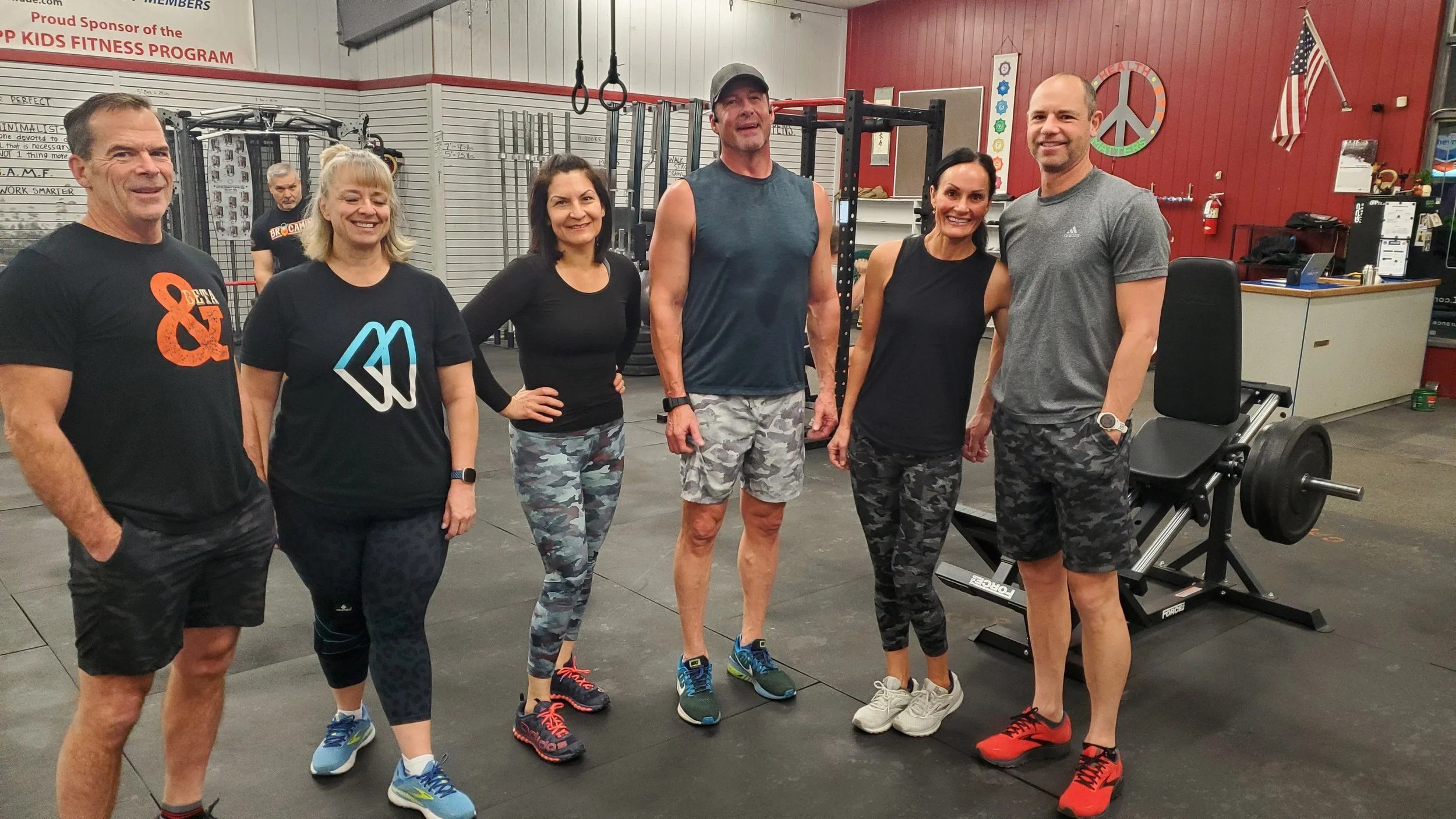
The GPP Gym and RWND group is a tremendously kind and supportive community. The individuals who comprise this community are renowned for their thoughtful participation in each other’s success. I feel fortunate every day to be a part of it. However, when I first created my gym, I had no aspirations whatsoever of creating a community. I was a personal trainer. In my mind, great trainers exist only to create marvelous programming aimed at improving fitness. That was my sole purpose. 

Trainers are nerds about this. We love the physiology and biomechanics of exercise. It is all that is important to us. In the old days, if you’d have hit me up about my thoughts on “community” I would have scoffed at the idea. I would have thought of community as nothing more than a byproduct of great programming. In my mind programming was key. I mistakenly thought great programming was all one needed to become as fit and healthy as they’d like. 

Back then I wore the tremendous effort and time I put into programming as my most noteworthy badge of honor. It's all I talked about. It's all I wrote about. It's all I thought about. Then something happened. 

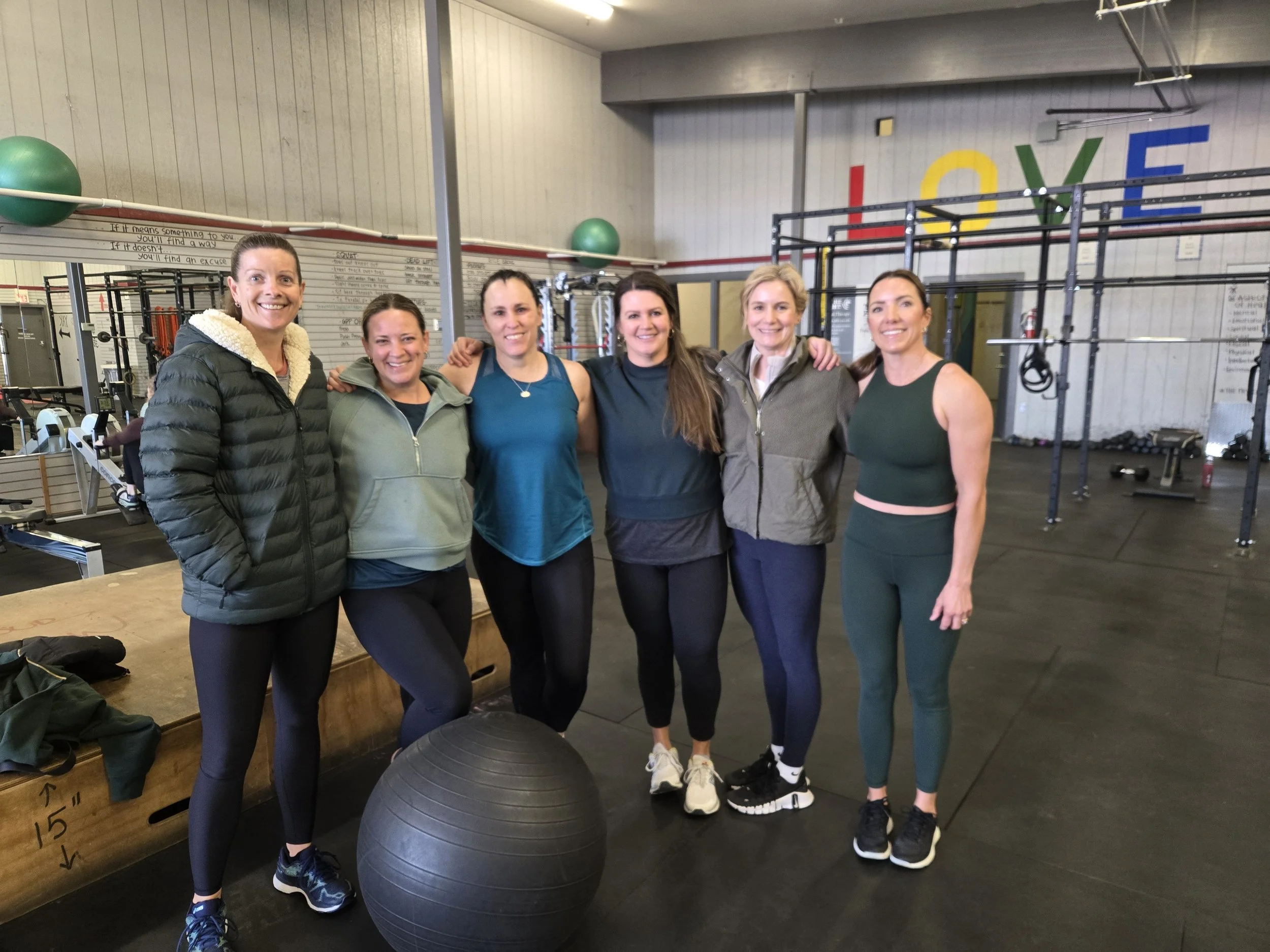
One morning at the 0930 class I was introducing the workout and showing movements to folks, mostly ladies, preparing for the workout. This particular group of ladies had been coming to the gym for several years and they were, by and large, in phenomenal shape. Many of these 30+ year old mothers with busy lives were capable of astonishing feats of physical strength and endurance. Most could do multiple sets of full pullups, heavy overhead squats, bodyweight deadlifts for numerous reps, and the like. They also carried exceptionally low levels of body fat. I assumed they were the ones who would enjoy hearing about the rudiments and fundamentals of the workout I was explaining. So, I went into detail. As I do. I was in full nerd mode as I was explaining some theoretical hypothesis having to do with programming design when one of the moms rolled her eyes, threw her head back and cried out loud, “We. Don’t. CARE!” 

They all clapped.

I wasn’t as embarrassed as I should have been. I was just stunned. How could they not care? How is it, these incredibly fit humans don’t care about the scholarly fundamentals  of program design? How did they even become so fit in the first place if they weren’t constantly dissecting the principles of movement patterns and the chemistry of nutrition? I really couldn’t wrap my head around it. 

After the workout, I cornered the girl who spoke up. “I'm sorry. We all hate your lectures. None of us care. We come here to get a great workout, but mostly to socialize. This is the only time of the day when I get to see my friends.” 

And there it was. 

Humans need social contact. Eyeball to eyeball is best. When humans approach and engage each other within touching distance we are gifted with the wonderful effects of a hormone called oxytocin. Oxytocin is called the love hormone because of how happy it makes us feel during human contact. It can be a real problem for our health if we don’t get this. It can be a real boon to our health when we do. 

Social scientists will tell you the biggest determinant of longevity and a healthful life is our ability to create and maintain social bonds and be a part of a supportive community. Did you know people with weak social networks are 50% more likely to die young? They are also more likely to suffer from diseases. Nasty ones like, Alzheimer's, heart disease, cancer, and lower immunity. One of the worst punishments a human can experience is social isolation. Self-imposed social isolation is no different.


Steps to Improve Your Social Health

Social health isn’t complicated… but it does require intention. Here’s where to start:

Get Face-to-Face
Texting isn’t connection. It’s maintenance.
Make time to actually be around people—talk, laugh, train, share space.
(Yes… joining a place like GPP counts 🙂)

Do Things With People
You don’t build relationships sitting at home “thinking about it.”
Join something—classes, groups, teams, anything that puts you around like-minded humans.

Listen Like You Mean It
Most people aren’t listening… they’re just waiting to talk.
If you want better relationships, actually hear people. That’s where connection lives.

Give Your Time
Volunteer. Help. Show up for something bigger than you.
You’ll meet good people fast when you’re all pulling in the same direction.

Use Social Media… Don’t Let It Use You
Social media is a tool—not a substitute for real life.
If it’s replacing real conversations, you’ve gone off track.

Be the One Who Reaches Out
Stop waiting for invites.
Plan the dinner. Send the text. Set it up.
Strong social circles don’t happen by accident.

Be Willing to Open Up
Surface-level effort gets surface-level results.
If you want real connection, you’ve got to let people see you a bit.


In a world where we're more interconnected digitally than ever before, the essence of human connection is still rooted in the power of face-to-face interaction. We often overlook Social health. This is a mistake. Having a healthy social life is the secret ingredient. Our ability to form and maintain genuine relationships isn't just a "nice-to-have" feature of life; it's an essential pillar of well-being.

Looking back at the journey of creating my gym, I came face-to-face with the surprising realization that even the most dedicated fitness bad-asses weren't there solely for, what I considered, “marvelous program design.” Haha. They craved more than sets and reps; they yearned for human connection. It was the camaraderie, the shared laughs, and the bonds formed through sweat and struggle that truly fueled their tremendous health.

Social health isn't just about the oxytocin-driven "feel-good" effects of human touch—it's about something deeper. It's about being part of a community, whether that means finding kinship in a physical space or joining a virtual tribe through the wonders of technology. We've discovered that weak social networks are like a silent poison. It’s poison that kills slowly. But the beauty is, we possess the antidote—connection.

Comment